15 Weekend DIY Projects Under $100 That Improve Your Home
The best weekend DIY projects under $100 are painting one room, re-caulking a tub, swapping cabinet hardware, sealing drafts, changing to LED bulbs and adding a WaterSense showerhead. Each fits in one to two days for a beginner. None is guaranteed to raise your sale price, but several cut utility bills and Realtors often recommend fresh paint before listing.
From the guide: Budget Home Improvement: Where to Spend and Where to Save
Weekend DIY projects under $100 are small, finishable jobs that improve how a home looks or works without a contractor. If you are deciding how to spend a larger budget, start with our hub on improving your home on a budget, then come back here for the quick wins.
Do weekend DIY projects really add value?
They add everyday value for sure, and resale value in some cases. We found no published data that puts a dollar figure on a $100 project, so we use only claims we can source.
Here is what the evidence supports:
- Paint. In the NAR and NARI 2025 Remodeling Impact Report, 50% of Realtors recommend painting the entire home before listing and 41% recommend painting one room.
- Lower bills. The U.S. Department of Energy says sealing air leaks can save 10% to 20% on heating and cooling, and LED bulbs use at least 75% less energy than incandescent bulbs.
- Water savings. The EPA says a WaterSense showerhead saves the average family about 2,700 gallons a year.
For projects that really move a sale price, see the home improvement projects with the best return. They cost far more than $100.
What are the best weekend DIY projects under $100?
The best projects are the ones that match your skill, your calendar and your biggest annoyance. The table above gives time and spend; the list below explains each one. Spend ranges are our planning estimates for one room, one door or one fixture, not quotes.
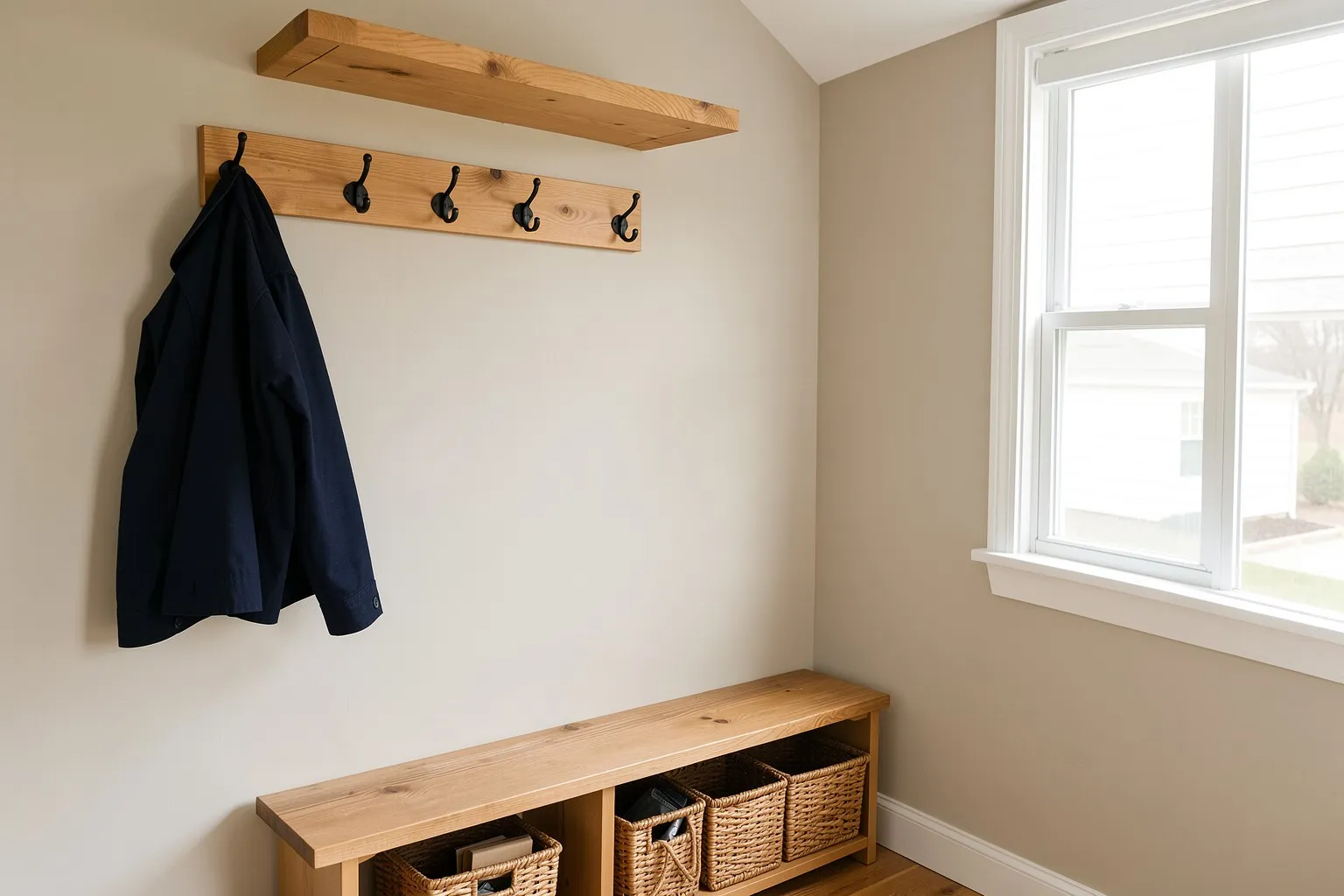
1. Paint one room or an accent wall
A single room is a project that fits under $100, and Realtors recommend painting before listing. Measure the walls and read the coverage on the can to work out how many gallons you need, so you do not pay for extra. Wash walls, patch holes, tape edges and apply two coats. In a pre-1978 home, read the lead-safe warning below before any scraping or sanding.
2. Paint the front door
A fresh front door color makes the entry look cared for. Remove or tape the hardware, clean and lightly scuff the surface, and use a paint made for exterior doors. Wait for dry weather and give the door time to dry before you close it fully.
3. Replace cabinet hardware
New knobs and pulls update a kitchen or bathroom in an hour or two. Measure the distance between screw holes on existing pulls so new ones fit without drilling. For the next step up, see our budget kitchen makeover guide.
4. Add a peel-and-stick backsplash
Peel-and-stick tiles cover a small kitchen or bathroom wall without grout. Clean and dry the wall, start from a level line, and keep tiles away from direct flame and high heat near a stove. This is also a renter-friendly option if you check the manufacturer’s removal advice.
5. Re-caulk a tub or sink
Fresh caulk keeps water out of the wall and makes a bathroom look clean. Cut out the old caulk, clean and dry the joint, apply a bead of kitchen-and-bath sealant, and let it cure as the label says before the first shower. More one-day jobs are in our guide to bathroom upgrades you can DIY in a single day.
6. Install a WaterSense showerhead
WaterSense-labeled showerheads use no more than 2.0 gallons per minute, compared with 2.5 for a standard head. Unscrew the old head by hand or with a cloth-wrapped wrench, wrap the threads with plumber’s tape, and screw on the new one.
7. Swap in LED bulbs
LEDs use at least 75% less energy than incandescent bulbs and last 25 times longer, according to the U.S. Department of Energy. Match the brightness (lumens) and color temperature to the room, and check that bulbs are rated for any dimmer you use.
8. Weatherstrip doors and windows
Weatherstripping is one of the fastest ways to cut drafts. The Department of Energy lists weatherstripping doors and windows and caulking gaps where pipes and wires pass through walls among its core air-sealing steps. The Department of Energy says to complete air sealing before you consider adding insulation. It also advises combustion safety testing as part of any air-sealing project, so if you have a furnace or water heater that burns fuel, ask your utility or an HVAC technician before sealing heavily.
9. Hang floating shelves
Shelves add storage and display space. Find studs with a stud finder, use a level, and use wall anchors rated for the load when you cannot hit a stud. Check for pipes and wires before you drill; do not drill near outlets, switches or in walls that might hold plumbing.
10. Replace outlet and switch cover plates
New cover plates are an inexpensive style upgrade. Turn off the circuit at the breaker as a precaution, unscrew only the plate, and leave the device and wires alone. If you want to replace a switch itself, follow our light switch installation guide and the limits in DIY electrical basics.
11. Build an entry drop zone
A row of hooks, a shelf and a basket keep keys, bags and shoes off the floor. Mount hooks into studs or use anchors rated for the weight, and keep it simple so it is finished by Sunday.
12. Refresh house numbers and the mailbox
Clear, well-lit house numbers help visitors and emergency responders find you, and they are among the cheapest curb appeal upgrades. If you plant a mailbox post or anything else in the ground, call 811 first; it is free. See more in our list of cheap curb appeal ideas.
13. Plant containers and add fresh mulch
Potted plants by the door and fresh mulch in beds make the yard look tended. Choose plants that suit your sun and climate, and keep mulch a few inches away from the house siding and from tree trunks.
14. Add simple wall molding
Picture-frame style molding on one wall adds detail. Measure and mark a plan with painter’s tape first, cut with a miter box, glue and nail the pieces, then caulk the seams and paint. This is the most skill-demanding job on the list.
15. Patch holes and touch up trim
Filling nail holes and touching up scuffed trim is cheap and surprisingly visible. Scrape loose paint (see the lead warning), fill with spackle, sand lightly, then prime and paint the patch. Our home repair for beginners hub covers larger patches.
How do you plan a weekend project?
Pick one project, buy materials Thursday, and finish prep before Saturday. A short plan prevents the most common failure: starting three projects and finishing none.
- Measure and list. Write down dimensions and a materials list with a price for each item.
- Check your tools. Borrow or rent what you need. Our tool kit guide shows what is worth owning.
- Prep Saturday morning. Clean, tape, patch and protect floors.
- Do the visible work Saturday afternoon. Leave drying and curing time for Sunday.
- Clean up and log it. Keep receipts and a note of paint colors and product names.
For bigger plans, plan a budget renovation so these weekends add up to something. If you have more to spend, affordable home upgrades by budget tier shows what to do at $500 and $1,500.
What safety checks should you do before you start?
Check three things before any weekend project: the age of your paint, what is buried or inside the wall, and whether you need permission.
- Lead paint. The EPA says about three-quarters of homes built before 1978 still contain some lead-based paint and that renovation can easily create dangerous lead dust. EPA recommends that homeowners hire a lead-safe certified contractor. The rule generally does not cover homeowners working on their own homes, but it does apply if you rent all or part of the home, and the agency advises DIY lead-safe practices if you do the work yourself.
- Buried lines and wiring. Call 811 before digging, and turn off the breaker before touching anything electrical. Test that the circuit is dead; our electrical limits guide explains how and when to stop.
- Permission. Renters need the landlord’s approval, and some neighborhoods have rules for exterior changes.
What tools do you need for these projects?
Most of these projects need a handful of basic tools: a tape measure, a level, a drill or screwdriver, a putty knife, a caulk gun and a stud finder. You can usually borrow or rent anything beyond that. Our tool kit guide separates what to buy now from what to skip.
Buy tools only when the job justifies them. A $100 budget shrinks fast if $40 of it goes to a tool you will use once.
How do you pick the right project for your weekend?
Pick the project that fixes the problem you notice every day, then match it to your skill and time. A sticky door or a drafty window is a better first choice than a decorative project, because you will feel the improvement daily.
- If you have two hours: swap bulbs, cabinet hardware, cover plates or a showerhead.
- If you have one day: re-caulk, paint a door, install weatherstripping or hang shelves.
- If you have two days: paint a room or add wall molding.
- If you rent: use the renter-friendly list in the FAQ and ask your landlord first.
| Project | Spend | Time | Skill |
|---|---|---|---|
| 1. Paint a room or accent wall | $50 to $100 | 1 to 2 days | Beginner |
| 2. Paint the front door | Under $50 | Half a day plus drying | Beginner |
| 3. Replace cabinet hardware | Under $100 | 1 to 3 hours | Beginner |
| 4. Peel-and-stick backsplash | $50 to $100 | Half a day | Beginner |
| 5. Re-caulk tub or sink | Under $25 | Half a day plus cure time | Beginner |
| 6. WaterSense showerhead | Under $50 | 30 minutes | Beginner |
| 7. LED bulb swap | Under $50 | 1 hour | Beginner |
| 8. Weatherstrip doors and windows | Under $100 | Half a day | Beginner |
| 9. Floating shelves | $50 to $100 | Half a day | Beginner to intermediate |
| 10. New outlet and switch cover plates | Under $25 | 1 hour | Beginner |
| 11. Entry drop zone with hooks | $50 to $100 | Half a day | Beginner |
| 12. House numbers and mailbox refresh | Under $100 | 1 to 3 hours | Beginner |
| 13. Container planting and fresh mulch | $50 to $100 | Half a day | Beginner |
| 14. Simple wall molding | $50 to $100 | 1 to 2 days | Intermediate |
| 15. Patch holes and touch up trim | Under $25 | Half a day | Beginner |
If you have one weekend, do projects 5, 7 and 8 first: they cost little and lower bills or prevent water damage. For looks, paint a room or the front door. Save molding and shelves for when you have a stud finder and a free Saturday.
Questions and answers
What weekend DIY projects add the most value to a home?
Paint, a refreshed front entry and small fixes that buyers notice add the most value for the money. The NAR and NARI 2025 report found 50% of Realtors recommend painting the whole home before listing and 41% recommend painting a single room. No source we found puts a dollar value on a $100 project, so choose jobs you will also enjoy.
How can I keep a weekend project under $100?
Limit the scope to one room, one door or one fixture, and buy only what that scope needs. Measure first so you do not buy extra, borrow or rent tools you will use once, and compare store brands. Add a small buffer of $10 to $20 for tape, screws and surprises. If a job grows, stop and stage it over two weekends.
What can I do in one weekend without hiring a pro?
You can paint a room, re-caulk a tub, swap cabinet hardware, seal drafts, change bulbs and fixtures that plug in, and hang shelves in a weekend. These jobs need basic hand tools and no permit in most areas. Anything that involves changing wiring, plumbing behind walls, gas or structure should go to a licensed professional.
Do I need permits for weekend DIY projects?
Most cosmetic projects such as painting, hardware swaps and shelves do not need permits, but rules vary by city and by whether you rent. Electrical, plumbing and structural work often does need a permit. Fence and mailbox posts may have local rules too. Call your local building department if you are not sure, and ask your landlord before changing a rental.
Is it safe to sand or scrape old paint?
Not without precautions if the home was built before 1978. The EPA says about three-quarters of those homes still contain some lead-based paint, and any renovation, repair or painting project can easily create dangerous lead dust. EPA recommends that homeowners hire a lead-safe certified contractor, and if you do the work yourself, use the EPA's do-it-yourself lead-safe work practices.
Which DIY projects save money on bills?
Sealing air leaks, switching to LED bulbs and installing a WaterSense showerhead save money after you finish. The U.S. Department of Energy says sealing leaks can cut heating and cooling bills by 10% to 20%, and LEDs use at least 75% less energy than incandescent bulbs. EPA says a WaterSense showerhead saves the average family about 2,700 gallons of water a year.
What are good weekend projects for renters?
Choose changes you can reverse: peel-and-stick backsplash, new cabinet hardware (keep the old pieces), LED bulbs, a WaterSense showerhead, container plants and removable hooks. Skip painting, shelves that need wall anchors and anything that changes fixtures until your landlord approves in writing. Keep the original parts so you can restore them.
Our sources
- U.S. Department of Energy: Tips on Saving Money and Energy in Your Home (energy.gov)
- U.S. Department of Energy: Guide to Energy Efficient Lighting (energy.gov)
- U.S. Department of Energy: Energy Renovations HVAC (combustion safety testing) (energy.gov)
- EPA WaterSense: Showerheads (epa.gov)
- NAR and NARI 2025 Remodeling Impact Report highlights (nar.realtor)
- EPA Renovation, Repair and Painting Program (epa.gov)
- 811 Before You Dig (811beforeyoudig.com)
Related reading
- Budget Home Improvement: Where to Spend and Where to Save
Plan budget home improvement the smart way: what to fix first, which jobs you can DIY, what pays back, with a cost, difficulty and payoff table.
- DIY vs Hiring a Pro: When Doing It Yourself Actually Saves Money
Is DIY cheaper than hiring a pro? Count tools, time and mistakes, find your break-even hourly value, and see which jobs rarely pay off and which do.
- Tile Calculator: How Many Tiles and Boxes for Floor, Wall or Backsplash
Work out how many tiles and boxes a floor, wall or backsplash needs: area formula, grout joint, waste by pattern, thinset coverage and a worked example.
- Affordable Home Upgrades by Budget: $100, $500 and $1,500 Ideas
Affordable home upgrades sorted by budget: what $100, $500 and $1,500 buys, with cost ranges, time, skill level and a comparison table.
- Budget Renovation Tips: How to Plan, Save and Avoid Overspending
Budget renovation tips for setting a budget, adding a contingency, choosing what to save or splurge on, deciding DIY versus pro, and permits.
- Budget Kitchen Makeover: Ideas by Budget Tier
Plan a budget kitchen makeover by tier, from paint and hardware to lighting and backsplash, with a paint vs reface vs replace cabinet comparison.