Updating your home doesn’t require a large budget—just smart choices that improve comfort, function, and style without major renovations. These targeted upgrades show that small changes can transform your space while keeping costs reasonable. Whether you’re experienced with DIY projects or just starting, these ideas prove you can refresh your home without overspending.
A 2025 survey by the National Association of Home Builders found that 68% of homeowners prefer cost-effective upgrades over luxury features when planning renovations. This reflects a growing focus on practical improvements that enhance daily living. Simple projects like fresh paint, updated hardware, and smart space solutions often deliver the best results. Budget Builds Daily has tested and refined these approaches through years of hands-on work, confirming they work in real homes.
Quick Overview
- Focus on low-cost renovation ideas that improve both appearance and function.
- Use simple upgrades with DIY-friendly materials and methods.
- Start with small budget decor changes to refresh your space without a full remodel.
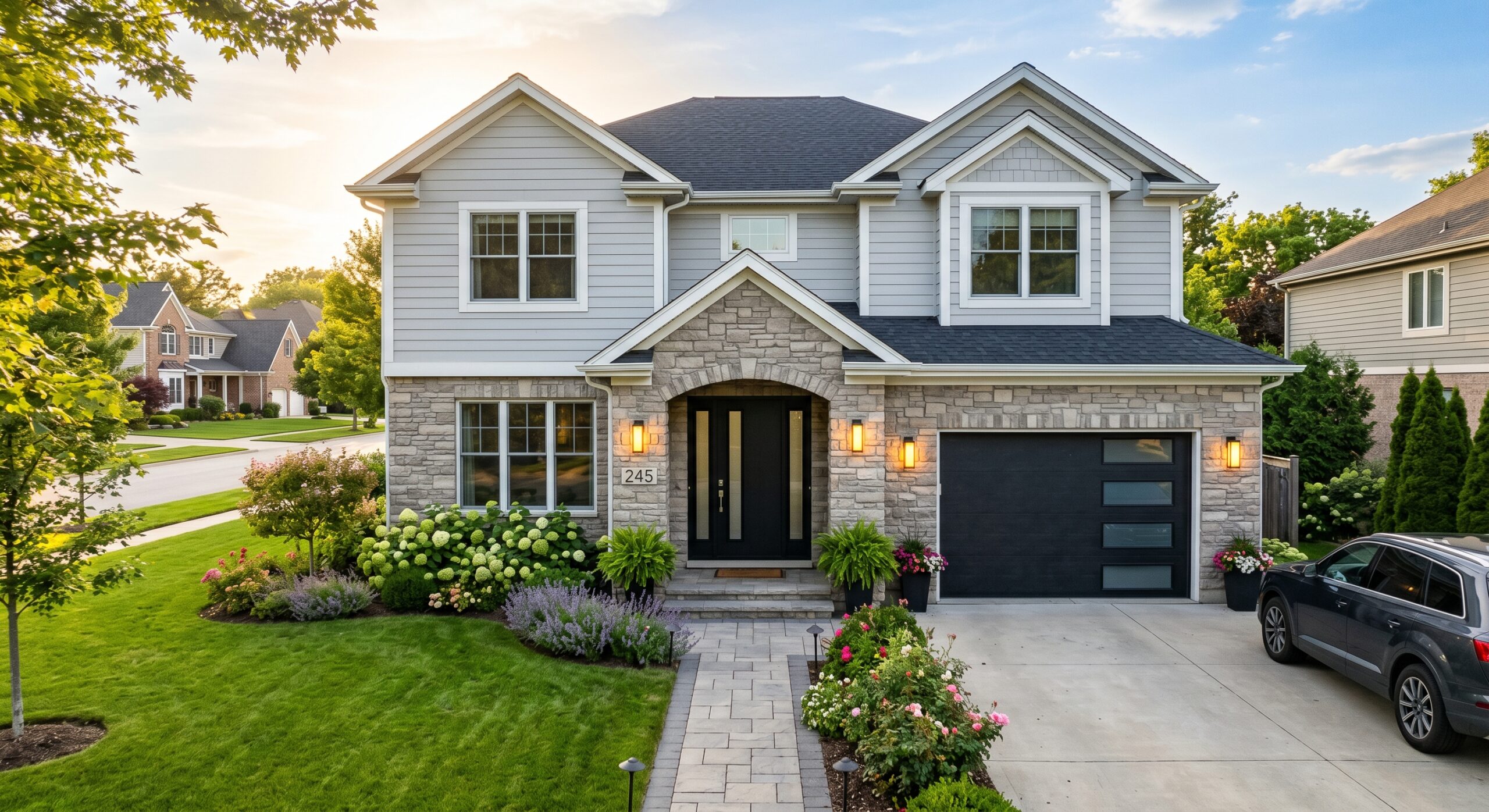
- Try affordable projects that boost value and curb appeal without a big investment.
This guide breaks down the most effective affordable home upgrades into clear categories so you can choose projects that match your goals and budget.
—
Why These Upgrades Make Sense
Before diving into specific projects, it’s helpful to understand why these affordable home upgrades are worth your effort. The key is balancing cost with results—both in terms of money and daily living. These improvements aren’t just about saving; they’re about making your home more practical today while preparing it for the future.
According to Zillow’s 2025 Home Value Forecast, homes with updated kitchens, bathrooms, and curb appeal can see up to a 10% increase in perceived value, even when total upgrade costs stay under $5,000. That’s a strong reason to focus on targeted improvements rather than full renovations. Doing projects yourself also saves on labor and lets you control quality and timing.
These upgrades also affect how you feel about your home. A 2024 study in the Journal of Environmental Psychology found that homeowners who completed even small DIY projects reported higher satisfaction with their spaces and lower stress. Whether it’s a fresh coat of paint or new backsplash, these changes create a sense of ownership and pride.
At Budget Builds Daily, we focus on what works in real homes. We’ve seen how a $500 kitchen refresh or a $200 bathroom update can change a space completely. The best low-cost renovation ideas are the ones that fit your lifestyle—not just what’s trending. If you love hosting, invest in durable flooring or statement lighting. If comfort matters most, focus on insulation or better windows. The right upgrades depend on what you value.
—
Interior Upgrades That Work
Your home’s interior is where you spend most of your time, so it makes sense to start here with affordable home upgrades. These projects are designed to be manageable for DIYers, require minimal tools, and deliver noticeable results. Whether you rent or own, these ideas will help refresh your space without major work.
Paint: The Best Low-Cost Refresh
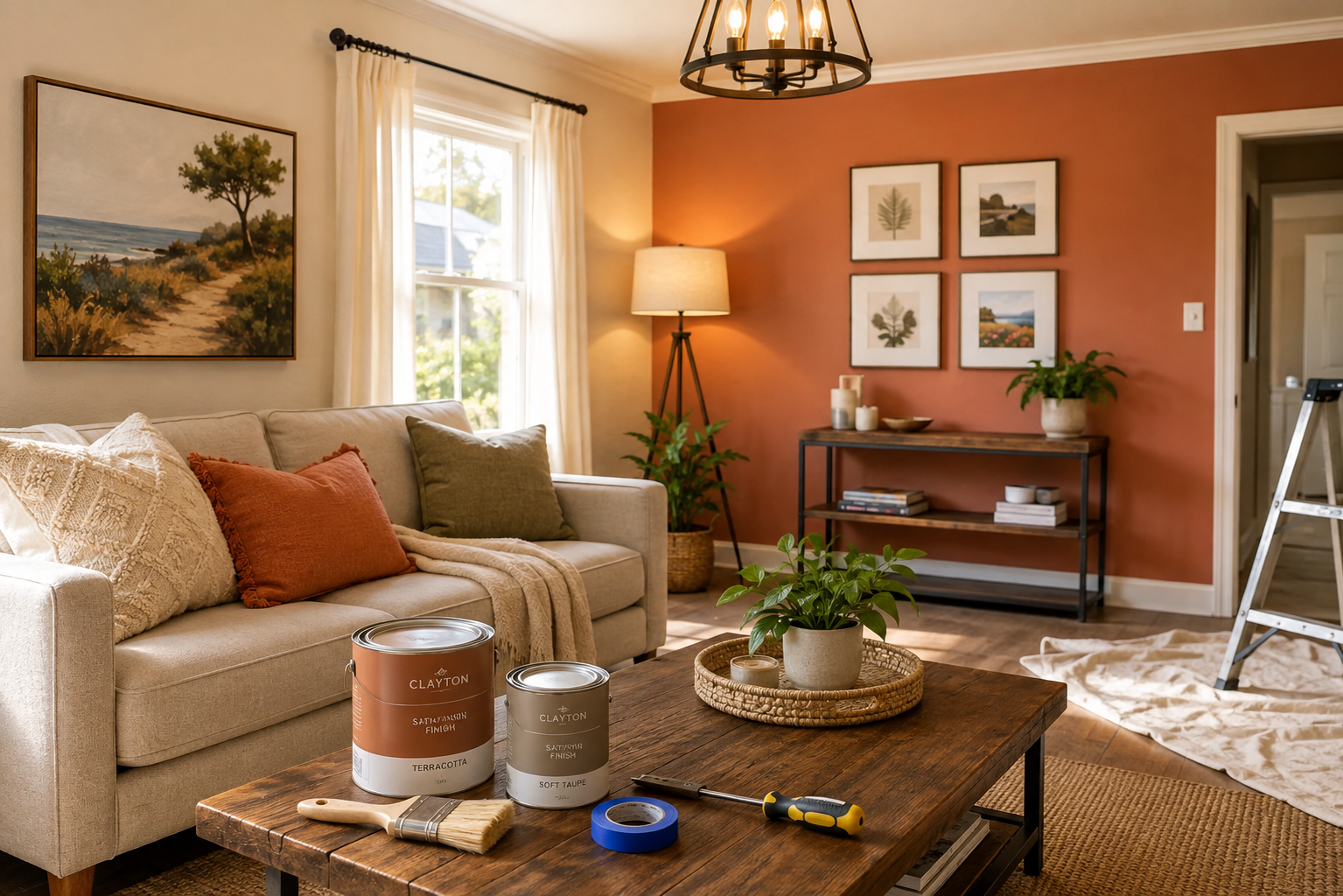
No simple home upgrade beats a fresh coat of paint. It’s one of the easiest and most budget-friendly ways to transform a room. The Paint Quality Institute reports that a gallon of quality paint covers about 400 square feet and costs between $30 and $60. That means you can repaint a whole room for under $100, including brushes and tape.
For the best results, consider:
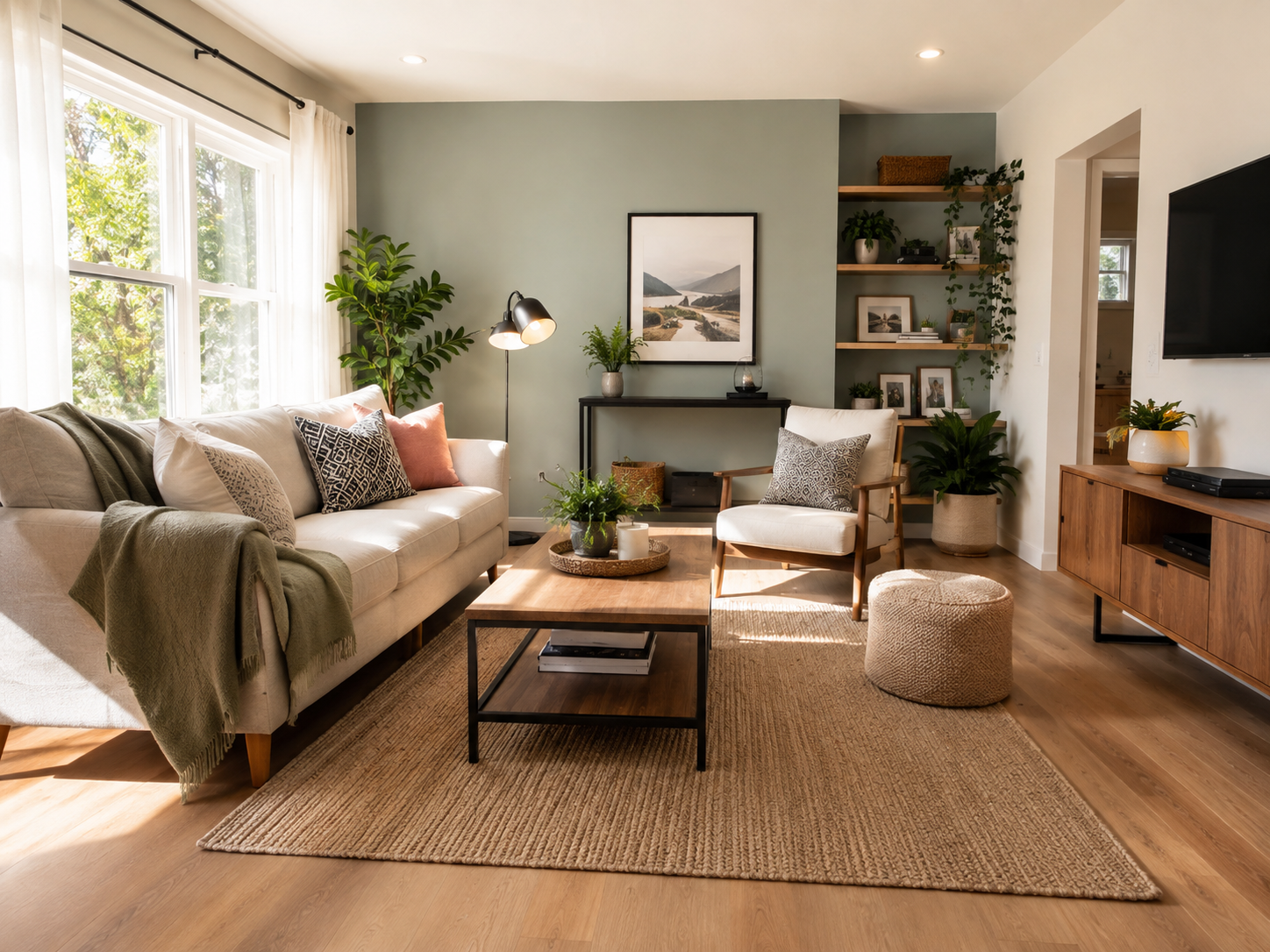
- Accent walls: Paint one wall a bold color or texture to create focus. Matte finishes work for modern looks, while glossy finishes hold up better in busy areas. Sherwin-Williams notes that deep jewel tones like emerald green and sapphire blue are popular choices for 2026.
- Ceilings: Often ignored, lighter ceilings than walls make rooms feel taller. For cozier spaces, try a slightly darker shade.
- Doors and trim: Painting or staining interior doors and baseboards updates a room quickly. White trim brightens spaces, while dark stains add warmth to dens or studies.
Tip: Use a paint additive like Floetrol for smoother application in humid areas. Proper prep—sanding and cleaning walls—helps paint last longer.
For more ideas, see our guide on 15 Weekend DIY Projects That Add Value To Your Home For Under $100.
Lighting: Brighten Your Space Affordably
Lighting sets a room’s mood, and you don’t need to spend much to improve it. Swapping old fixtures or adding new ones can modernize a space and work better. The U.S. Department of Energy estimates that switching to LED bulbs saves homeowners about $75 per year on energy costs.
Try these simple decor upgrades:
- Replace fixtures: Update ceiling fans, chandeliers, or wall sconces with new ones. Choose styles that match your space—modern, farmhouse, or industrial. Basic flush-mount lights cost under $50, while stylish pendant lights start around $80.
- Add plug-in lights: Don’t overlook plug-in lamps, string lights, or battery puck lights. These work well for under-cabinet lighting in kitchens, reading nooks, or closets. Stores like IKEA and Amazon offer affordable options that install easily.
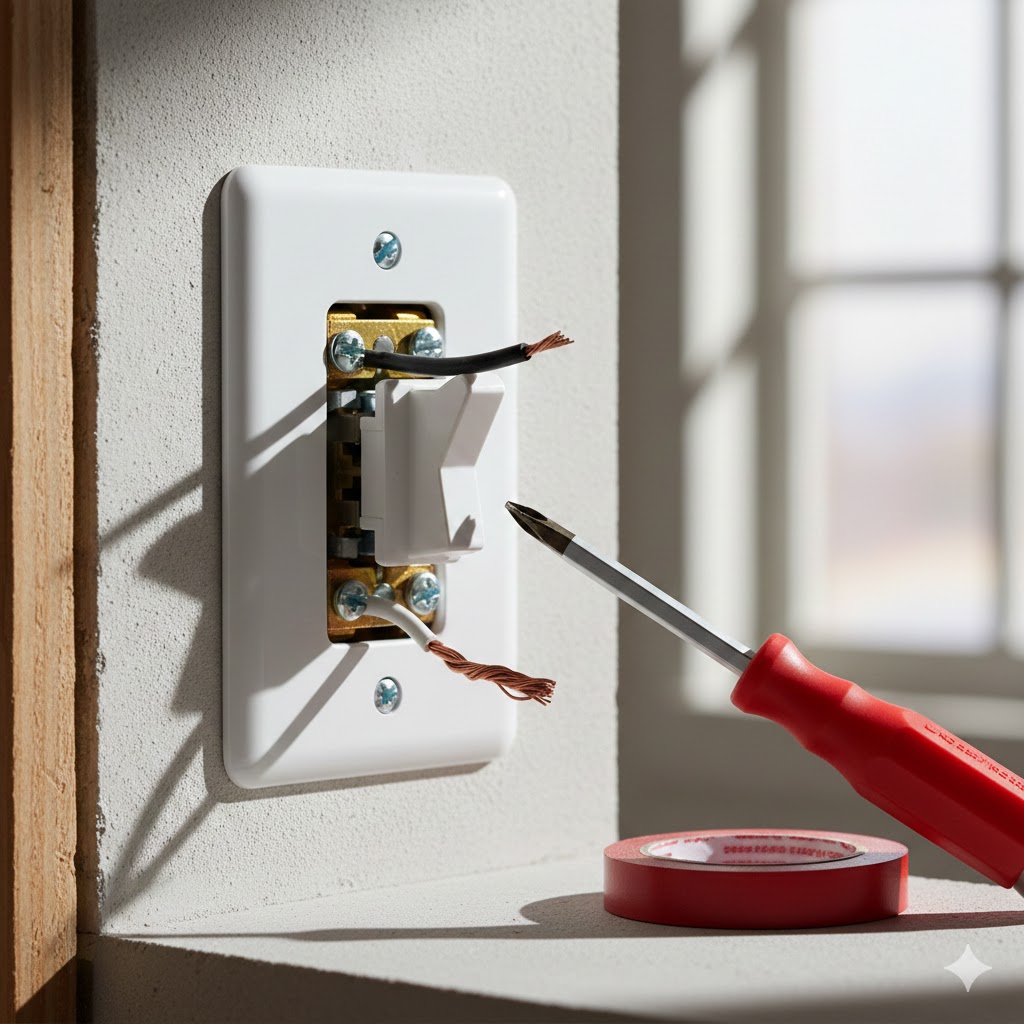
- Install dimmer switches: For under $20, add a dimmer to existing fixtures to control ambiance. This works well in living rooms, dining areas, and bedrooms. Follow safety guidelines—check our Home Electrical Projects: Understanding Your Limits And When To Seek Help for tips.
- Update lamps and shades: New lampshades or spray-painted lamp bases refresh a room’s look. Mixing metals and textures adds interest without major spending.
For step-by-step help, see our How To Install A Light Switch: A Complete Beginner’s Guide.
Flooring: Update Without Replacing
Flooring can seem daunting, but many affordable upgrades give great results. If your floors are in decent shape, try cosmetic updates instead of full replacement. Consider these options:
- Peel-and-stick vinyl tiles: Great for kitchens, bathrooms, or laundry rooms. They look like ceramic tile or hardwood and cost $1–$3 per square foot. The Vinyl Flooring Association reports these tiles are a top trend for 2026 because they’re affordable and easy to install.
- Laminate flooring: More durable than vinyl, laminate mimics wood or stone. It costs $1.50–$4 per square foot and often includes underlayment for sound. Look for click-lock systems that don’t need glue or nails.
- Area rugs: Layering rugs adds warmth and texture. Swap them as trends change. A large, quality rug anchors a living room or bedroom without permanent commitment.
- Painted floors: If your hardwood floors are in good shape but look dated, consider painting them. Use high-quality porch and floor paint. A 2025 This Old House tutorial recommends rollers for large areas and brushes for edges for a professional finish.
Tip: Measure carefully and buy 10% extra to account for mistakes. Acclimate vinyl or laminate to your home’s temperature for at least 48 hours before installing.
Cabinetry: Refresh Without Replacing
Kitchens and bathrooms often feel outdated because of their cabinets, but replacement is expensive. Instead, try these simple kitchen cabinet updates that create a full remodel look:
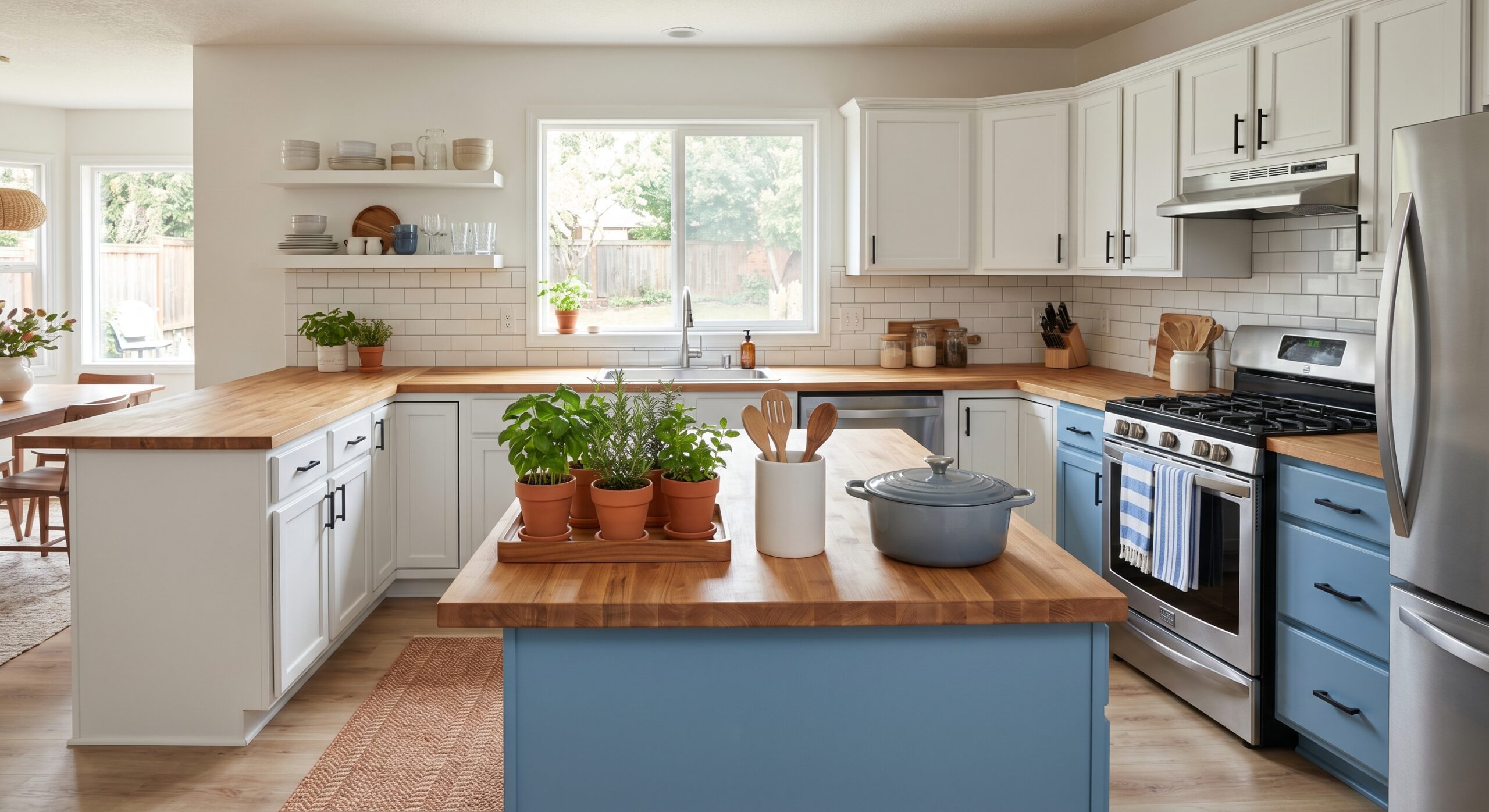
- Paint or stain: A gallon of cabinet paint costs $30–$50 and transforms tired wood or laminate. For a modern look, try two-tone cabinets—white uppers with navy or gray lowers. Bob Vila says painted cabinets are a top trend for 2026, with soft neutrals and bold contrasts popular.
- Replace hardware: New knobs and pulls cost $5–$15 each. Brushed nickel, matte black, and brass are trending in 2026.
- Add open shelving: Remove some cabinet doors to create shelves for dishes or decor. This works well in minimalist or farmhouse-style kitchens. Keep storage organized to avoid clutter.
- Contact paper: Adhesive contact paper covers cabinet interiors or open shelving quickly. It’s affordable, removable, and comes in many patterns and colors.
For more ideas, see our Budget-Friendly Kitchen Cabinets collection.
—
Exterior Upgrades That Improve Curb Appeal
First impressions count, and your home’s exterior is what visitors—and potential buyers—see first. Luckily, there are many simple upgrades that boost curb appeal without major spending. These projects are perfect for weekends and can be done in stages.
Landscaping: Small Changes, Big Results
A well-kept lawn and designed landscape make your home stand out. The Arbor Day Foundation reports that homes with mature trees sell for up to 18% more than similar homes without them. Even without space for large trees, small upgrades help:
- Mulch: Fresh mulch around trees, shrubs, and beds costs $3–$7 per bag and refreshes your yard. Dark mulch looks modern; red mulch adds color.
- Perennials and shrubs: Plants like hostas, daylilies, or hydrangeas keep gardens vibrant year after year. Shrubs such as boxwood or hydrangeas provide greenery even in winter. Perennial Pleasures Nursery suggests choosing plants suited to your climate for low-maintenance beauty.
- Edging: Define garden beds and walkways with plastic, metal, or stone edging. It costs $0.50–$3 per linear foot and adds a polished look.
- Container gardens: Potted plants and flowers add color to porches, patios, and entryways. Mix annuals for seasonal variety.
For inspiration, see our Budget-Friendly Landscaping collection.
Front Door and Entryway Updates
The front door is a key part of your home’s exterior. A fresh look makes a strong impression. Try these affordable upgrades:
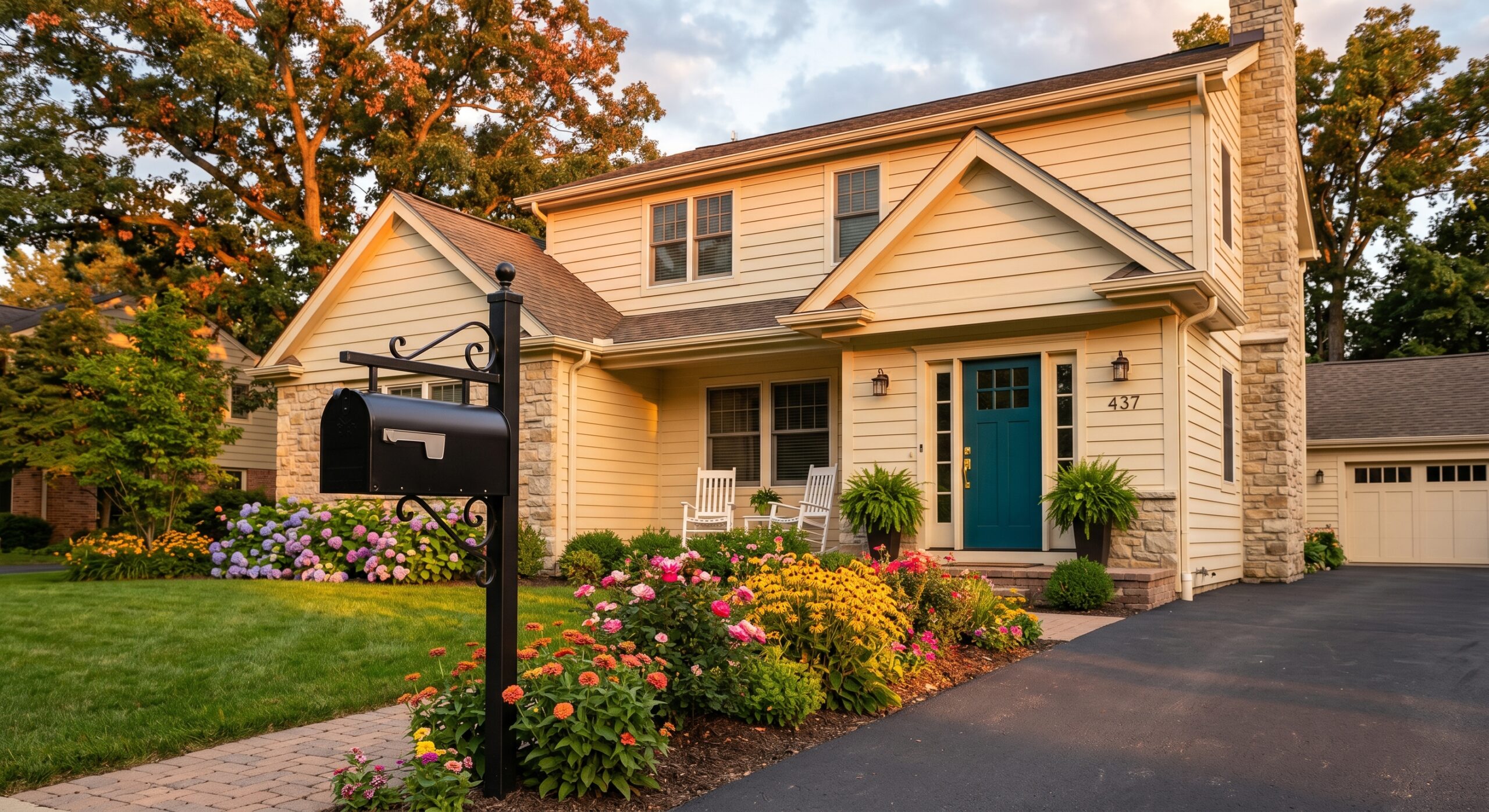
- Paint or stain: A bold color like deep red, navy, or forest green makes a statement. Classic choices like black or white work too. For wood doors, fresh stain revives their look. The Paint Quality Institute says exterior paint lasts 5–10 years, making this a smart investment.
- Hardware: Replace old doorknobs, knockers, and house numbers with new ones. Brands like Schlage and Kwikset offer affordable, easy-to-install options. A stylish mail slot or peephole modernizes your door.
- House numbers: Updating numbers to modern or vintage styles adds curb appeal. Solar-powered or LED options are energy-efficient and visible at night.
- Porch lighting: Add or update outdoor lights to improve safety and looks. Solar path lights or a new wall sconce cost under $50 and make your entry inviting.
For more ideas, see our 15 Cheap Curb Appeal Ideas To Transform Your Home’s Exterior.
Siding and Trim: Refresh Without Replacement
If your siding or trim looks dated, you don’t always need to replace it. Try these low-cost upgrades:
- Pressure washing: A good wash removes dirt, mold, and grime from siding, driveways, and walkways. Rent a washer for under $50 per day or hire a service for $150–$300. The Pressure Washer Guild of America recommends 1,500–2,500 PSI for home use.
- Paint or stain: If your siding is wood or fiber cement, fresh paint or stain revives its look. Use exterior-grade paint and prep surfaces by cleaning and sanding as needed.
- Trim updates: Painting or staining trim in a contrasting color highlights architectural details. White is classic, but black, gray, or bold hues work for modern looks.
- Shutters: Adding or updating shutters enhances style. Vinyl or composite shutters are low-maintenance and affordable. For DIY, use decorative panels that attach to existing frames.
For more inspiration, see our Low Cost Home Exterior Upgrades collection.
—
Kitchen and Bathroom Upgrades on a Budget
Kitchens and bathrooms are central to a home, but renovating them can be expensive. The good news? Many simple upgrades in these spaces deliver great results without a full remodel. Focus on looks, organization, and small changes that make a difference.
Kitchen Facelifts That Don’t Cost Much
The kitchen is the heart of the home, and even small updates can make it feel new. Try these low-cost kitchen improvements:
- Backsplash: A new backsplash changes your kitchen’s look. Peel-and-stick tiles cost $5–$15 per square foot. Ceramic tile starts around $1 per square foot. Houzz says subway tile remains popular for 2026 because it’s timeless and versatile.
- Countertops: If your counters are solid but dated, try refinishing with a countertop paint kit. Kits cost $100–$300 and last years. Butcher block countertops are another affordable, DIY-friendly option.
- Sink and faucet: New sinks and faucets modernize a kitchen. Stainless steel sinks start around $150; faucets under $200 work well. Look for pull-down sprayers or touchless features for convenience.
- Open shelving: Replace upper cabinets with shelves to create more space. This works well in small kitchens. Keep items organized with baskets or bins.
For more ideas, see our Low Cost Kitchen Improvements collection.
Bathroom Refreshes That Feel High-End
Bathrooms are small, so even small updates make a big impact. These budget bathroom upgrades are DIY-friendly:
- Paint: Fresh paint in a soothing color transforms a bathroom. Use moisture-resistant paint like Benjamin Moore’s Aura Bath & Spa. Light blues, grays, and whites are popular for 2026.
- Mirror: Swap an old mirror for a new one or add a frame to an existing mirror. Frameless mirrors look modern; framed mirrors add character. A medicine cabinet with a built-in mirror saves space.
- Fixtures: Update cabinet hardware, towel bars, and toilet paper holders for a cohesive look. Brushed gold, matte black, and chrome are trending in 2026. These pieces cost under $20 each.
- Showerhead: A new showerhead improves water flow and saves money. Look for models with multiple settings or low-flow options. The U.S. Environmental Protection Agency says low-flow showerheads save families 2,700 gallons of water per year.
For step-by-step help, see our Budget-Friendly Bathroom Upgrades You Can DIY In A Single Day.
- Towel racks and hooks: Add racks or hooks to keep towels organized and within reach. This small change makes a bathroom feel more luxurious.
- Lighting: Update fixtures or add LED strip lights around the mirror for better lighting. A single pendant light or pair of sconces modernizes a bathroom instantly.
—
Smart and Sustainable Upgrades
In 2026, sustainability and smart home tech are priorities for homeowners. The good news? Many affordable upgrades fit both trends while saving money long-term. From energy improvements to DIY smart projects, these ideas are worth considering.
Energy-Efficient Improvements
Reducing energy use lowers bills and increases home value. The U.S. Department of Energy offers incentives and rebates for energy upgrades—check what’s available locally. Try these budget ideas:
- Weatherstripping: Seal gaps around windows and doors with weatherstripping to save up to 10% on heating and cooling. Self-adhesive foam tape costs under $10 per roll and is easy to install.
- Thermostat: A programmable or smart thermostat saves up to 12% on heating and 15% on cooling. ENERGY STAR recommends models like the Nest Learning Thermostat or Honeywell RTH9585WF, which start around $130.
- Insulation: Add insulation to attics, basements, or crawl spaces to reduce energy loss. Blown-in insulation costs $1.50–$3 per square foot; DIY fiberglass batts are cheaper. The North American Insulation Manufacturers Association says proper insulation can cut heating and cooling bills by up to 20%.
- Window treatments: Thermal curtains or cellular shades reduce heat loss in winter and keep homes cool in summer. Choose options with an R-value of 3 or higher for best results.
For more tips, see our Affordable Home Maintenance collection.
DIY Smart Home Projects
Smart home tech doesn’t have to be expensive. Many affordable devices install easily and offer convenience and energy savings. Try these simple upgrades:
- Smart plugs: Plug-in smart outlets like Kasa Smart Plug or Amazon Smart Plug let you control lamps, fans, and appliances remotely. They cost $10–$20 each and work with Alexa and Google Assistant.
- Smart bulbs: LED smart bulbs like Philips Hue or Wyze Bulb can be scheduled or controlled via phone. They cost $10–$30 each and offer customizable lighting.
- Smart thermostats: As mentioned, these learn your habits and adjust temperatures automatically to save energy. They’re one of the best affordable upgrades for long-term savings.
- Smart doorbells: Video doorbells like Ring or Wyze offer security and convenience. They cost $100–$200 and install in under 30 minutes.
Tip: Start with one or two smart devices and add more as you get comfortable. Many systems work together, so you can build a smart home over time.
—
Common Mistakes to Avoid
Even the best affordable home upgrades can go wrong without proper planning. Avoid these pitfalls to ensure success and value:
Plan Before You Start
Jumping into a project without a plan wastes time and money. Before you begin, ask:
- What’s my goal? Are you updating for looks, function, or resale?
- What’s my budget? Set a realistic budget and include tools, materials, and surprises.
- Do I have the skills? Be honest. Some projects need a pro, like electrical or plumbing work.
- What’s the timeline? Some projects take a weekend; others take longer. Plan so you’re not frustrated.
Simple upgrades work best with careful planning. Measure twice, cut once.
Don’t Sacrifice Quality for Price
Choosing the cheapest option can cost more long-term. For example:
- Paint: Mid-range paint covers better and lasts longer than bargain brands.
- Tools: A $20 drill seems cheap, but a $100 drill saves time and frustration.
- Materials: Use durable materials like ceramic tile in wet areas. Avoid particleboard or laminate where moisture is common.
Consumer Reports recommends spending a little more upfront to avoid repairs later.
Safety First
Always put safety first, especially with tools, electricity, or chemicals. Some budget projects have hidden risks:
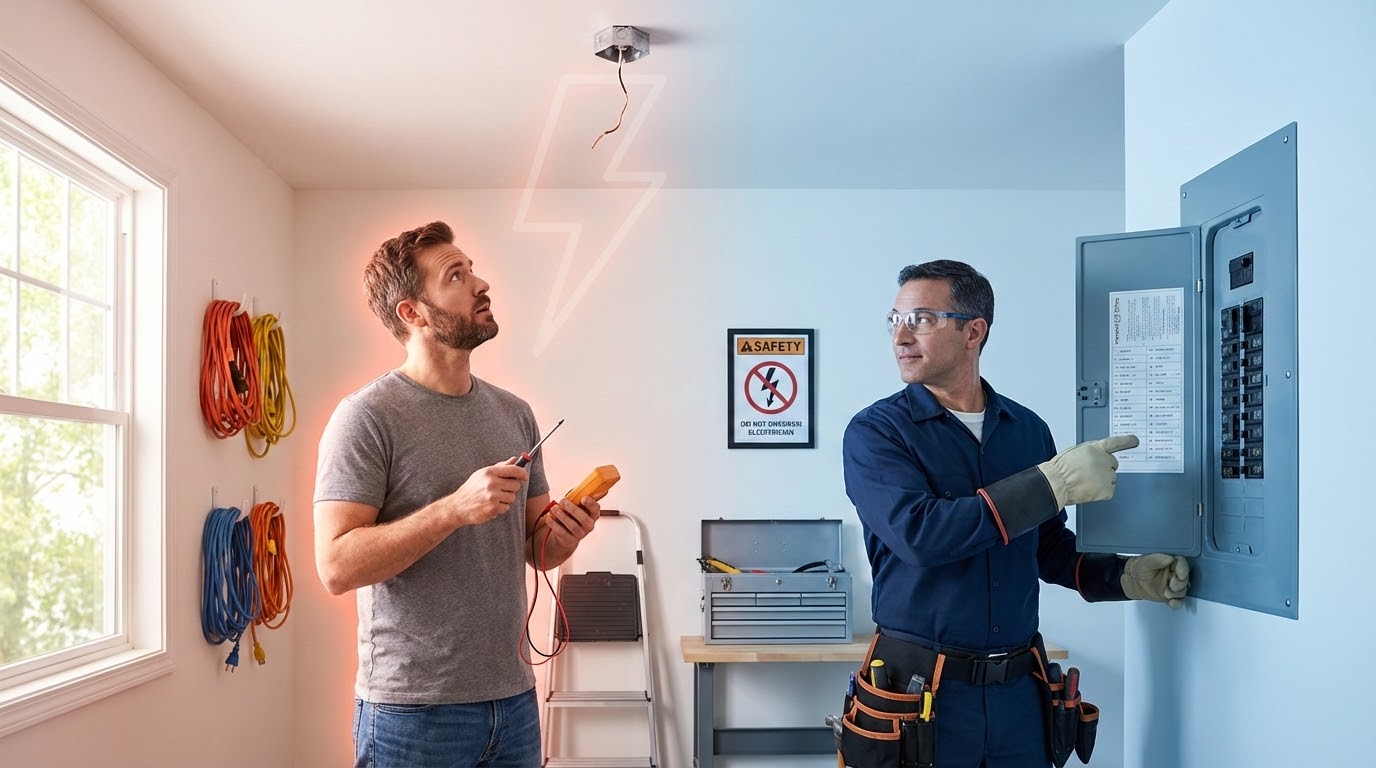
- Electrical work: If you’re unsure about wiring, call a pro. Our Home Electrical Projects: Understanding Your Limits And When To Seek Help guide can help assess your skills.
- Ladder safety: Use a sturdy ladder on level ground. Never stand on the top two rungs or overreach.
- Ventilation: Paint or adhesives need good airflow. Open windows and use fans.
When in doubt, ask for help to avoid injury or damage.
Balance Looks with Function
Don’t focus only on appearance. Ask:
- Does this improve daily life? For example, better lighting in a workspace or more storage in a kitchen.
- Is this sustainable? Choose materials and designs that last and won’t need frequent updates.
- Does this match my long-term goals? If selling soon, focus on upgrades with high resale value, like kitchens and bathrooms.
The best affordable upgrades combine beauty and practicality. Great looks mean little if they don’t work well.
—
Tools and Materials You’ll Need
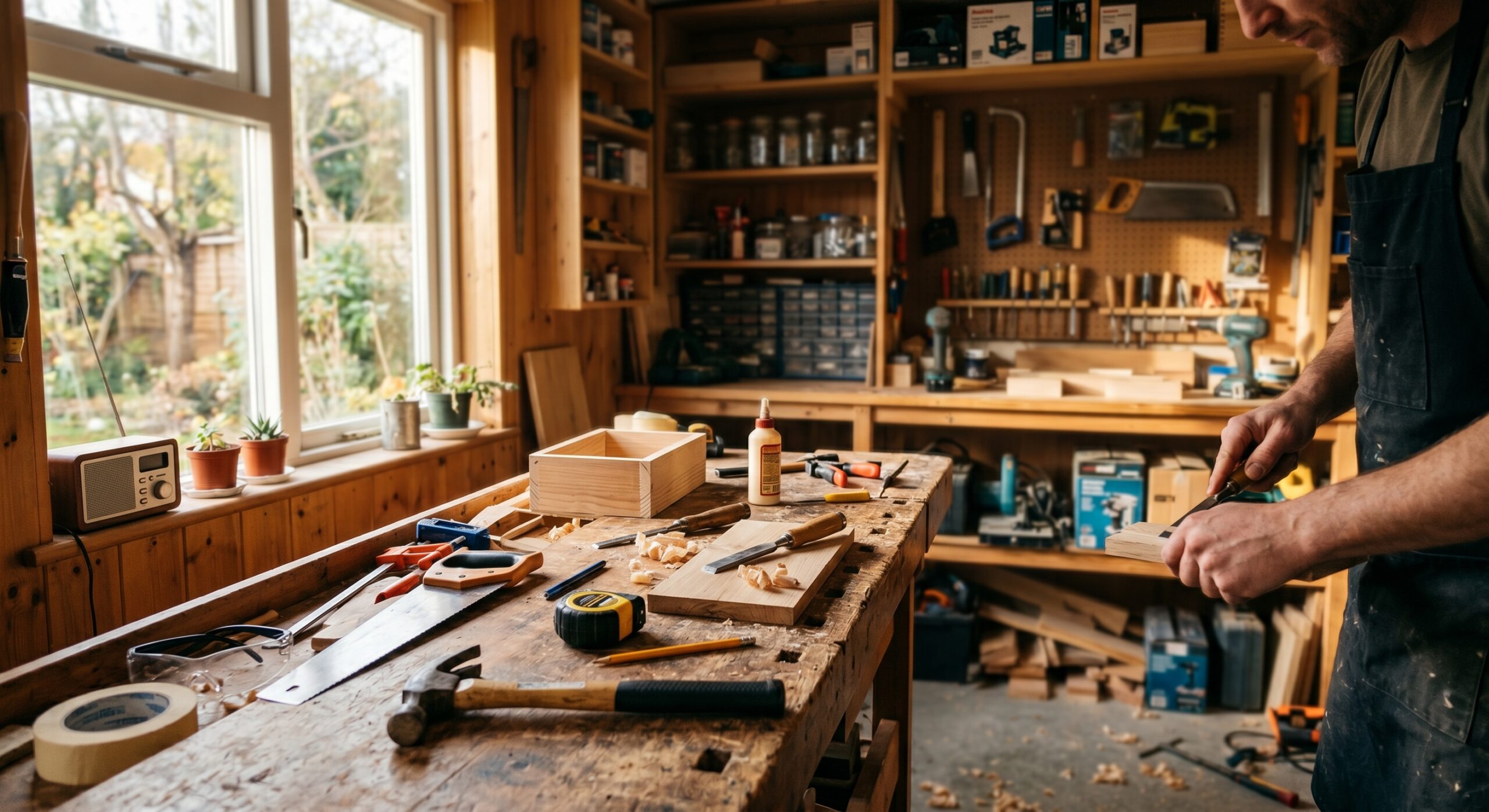
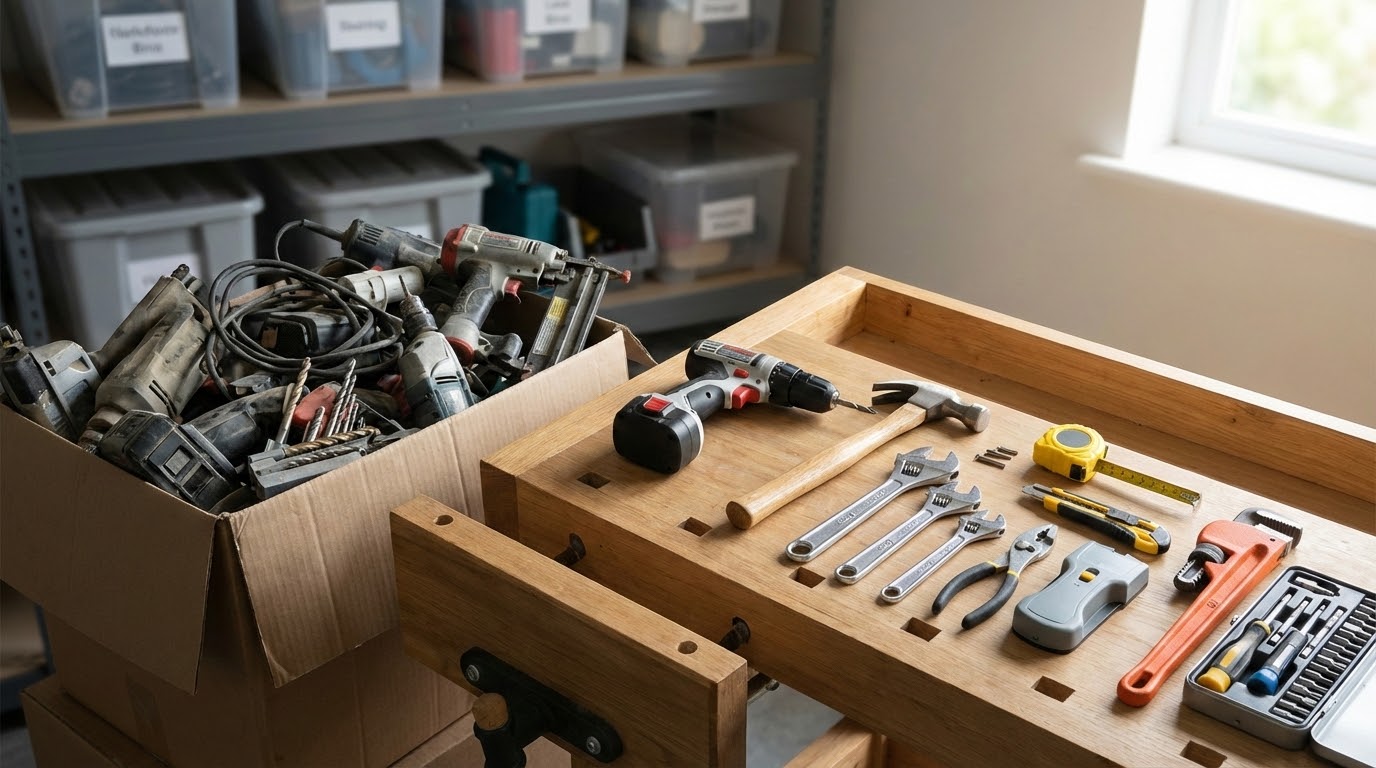
Successful DIY home improvement depends on having the right tools and materials. You don’t need a full workshop, but a few essentials make projects easier and look more professional. Here’s a basic list to start:
Essential Tools
These tools are worth owning because they handle many projects:
| Tool | Use | Estimated Cost |
|---|---|---|
| Cordless drill/driver | Drilling, driving screws, assembling furniture | $80–$150 |
| Tape measure | Accurate measurements for cuts and layouts | $10–$20 |
| Level | Keeping surfaces and fixtures straight | $10–$30 |
| Utility knife | Cutting drywall, flooring, or adhesive | $5–$15 |
| Paintbrushes and rollers | Applying paint and stain evenly | $15–$40 (set) |
| Screwdriver set | Assembling furniture, tightening fixtures | $10–$30 |
| Safety glasses and gloves | Protecting eyes and hands from debris and chemicals | $10–$20 |
| Drop cloths | Protecting floors and furniture during painting or repairs | $10–$30 |
Tip: If you’re new, look for tool sets at hardware stores or online. Many starter kits include a drill and accessories for under $100.
Budget-Friendly Materials
Choose versatile, durable materials when shopping. Keep these affordable options on hand:
- Plywood or OSB: Use for shelving, subflooring, or DIY furniture. Plywood starts around $20 for a 4×8 sheet; OSB is slightly cheaper.
- Drywall: For patching holes or new walls, 1/2-inch drywall costs $10–$20 per sheet.
- Paint and primer: A gallon of paint costs $30–$60; primer under $20. Choose zero-VOC or low-VOC for better air quality.
- Adhesives: Construction adhesive, caulk, and glue are useful for many projects. Caulk costs under $5; construction adhesive runs $5–$10.
- Fasteners: Screws, nails, and bolts in various sizes are essential. Assortment packs cost $10–$20.
For more details, see our DIY Home Improvement Projects collection.
—
Real-World Examples: Before and After
Seeing real results helps show what affordable upgrades can do. These examples from Budget Builds Daily readers and our team show dramatic changes for under $1,000 each.
Case Study 1: The $600 Kitchen Refresh
Before: A 1980s kitchen with laminate countertops, a harvest gold stove, and worn cabinets. The space felt dark and cramped.
After: A bright, modern kitchen with painted white cabinets, a butcher block countertop, and a geometric peel-and-stick backsplash. A new stainless steel stove and under-cabinet lighting completed the look.
Costs:
- Cabinet paint and supplies: $120
- Butcher block countertop: $150
- Peel-and-stick backsplash: $80
- New stove: $300
- Under-cabinet lighting: $50
Result: The homeowner increased their home’s value by about 8% and created a welcoming, functional space. Total cost was $600.
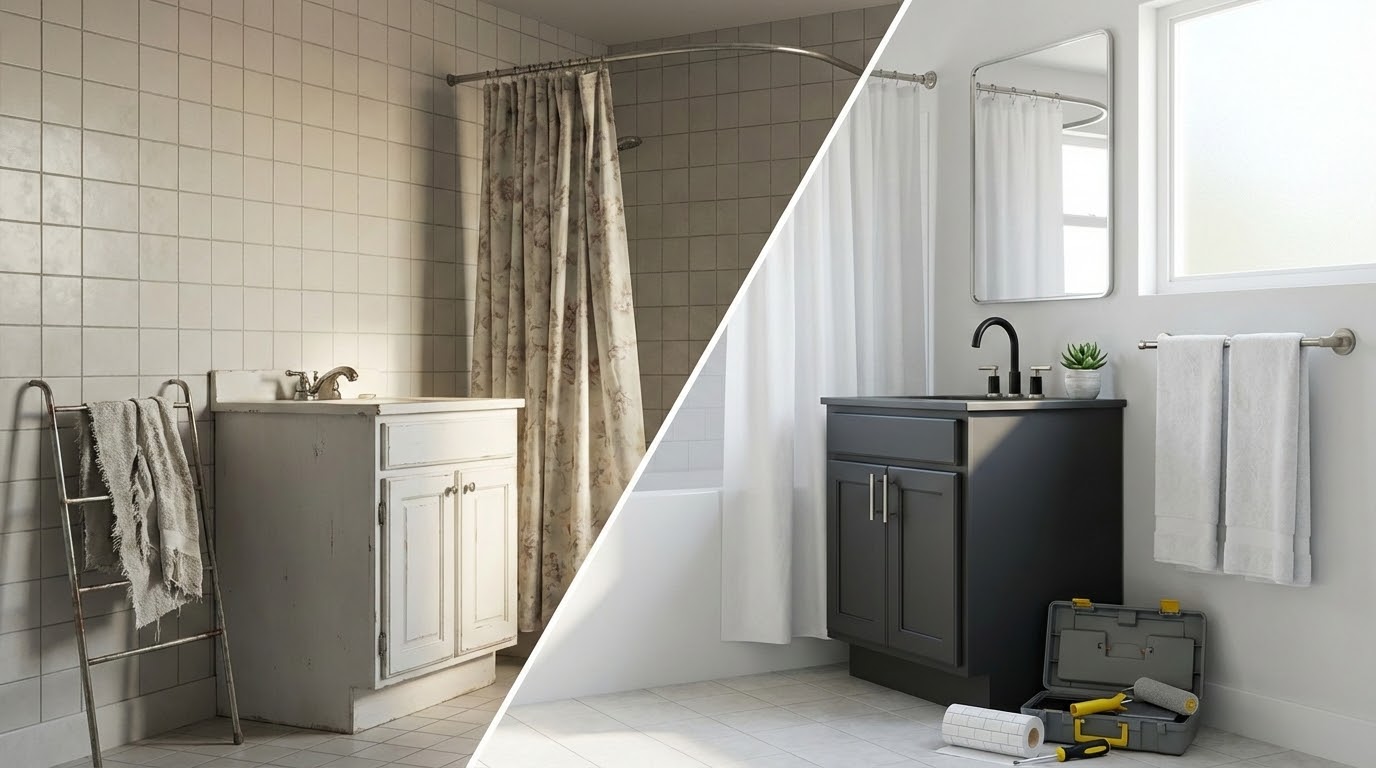
Case Study 2: The $400 Bathroom Facelift
Before: A small bathroom with a chipped porcelain sink, builder-grade mirror, and peeling wallpaper. The shower had a worn curtain and no storage.
After: A spa-like bathroom with a new vanity, frameless mirror, and peel-and-stick tile on the shower surround. The sink was refinished with a granite overlay, and new towel racks and hooks were added.
Costs:
- Vanity and sink: $200
- Frameless mirror: $80
- Peel-and-stick tile: $50
- Granite overlay for sink: $40
- Towel racks and hooks: $30
Result: The bathroom now feels modern and luxurious, with better storage. Total cost was $400, and the project took one weekend.
Case Study 3: The $800 Curb Appeal Boost
Before: A 1950s ranch with overgrown landscaping, a faded front door, and cracked walkways. The yard felt neglected.
After: A vibrant, inviting front yard with a fresh navy blue front door, new house numbers, mulched beds with perennials, and a stone pathway. Solar path lights lined the walkway.
Costs:
- Door paint and supplies: $50
- House numbers: $20
- Mulch and plants: $100
- Stone pathway materials: $200
- Solar path lights: $50
- Miscellaneous supplies: $80
Result: Curb appeal improved dramatically, with compliments from neighbors and potential buyers. Total cost was $800.
—
Final Tips for Success
As you start your affordable home upgrades, keep these tips in mind for the best results:
Start Small
If you’re new to DIY, begin with small projects like painting a room or updating cabinet hardware. Finishing these builds confidence and gives a sense of accomplishment. Move to larger projects like flooring or cabinetry as you gain experience.
Take Your Time
Rushing leads to mistakes and wasted materials. Measure carefully, plan each step, and work at a steady pace. Remember: simple upgrades work best when done right.
Document Your Work
Take “before” and “after” photos of your projects. They’re a source of pride and can inspire future work or even a DIY portfolio if you share your progress online.
Involve the Family
DIY projects can be fun for the whole household. Assign age-appropriate tasks to kids, like painting or organizing. They’ll learn skills and take pride in their space.
Maintain Your Upgrades
After completing budget decor updates, keep them in good shape. Regular cleaning, touch-ups, and upkeep ensure they last. For example, repaint exterior surfaces every 5–10 years and clean gutters annually to prevent water damage.
For ongoing tips, see our Budget-Friendly Fixes collection.
Celebrate Your Work
Finish each project with pride. Completing affordable upgrades is an achievement, and the results speak for themselves. Whether it’s a refreshed kitchen, cozy living room, or beautiful front yard, your home now reflects your effort and creativity.
At Budget Builds Daily, we believe affordable home upgrades are about more than saving money—they’re about creating a space that’s truly yours. With the right tools, materials, and mindset, you can transform your home without overspending.
Ready to start? Pick one project from this guide and do it this weekend. Your future self—and your budget—will thank you.
—
Affordable Home Upgrades: FAQ
What are the most cost-effective home upgrades?
The most cost-effective affordable upgrades focus on high-impact, low-cost projects like painting, lighting updates, and cabinet refreshes. A 2025 survey by Remodeling Magazine found the top three upgrades with the highest ROI are:
- Entry door replacement: Upgrading a steel entry door can recoup up to 94.7% of the cost at resale.
- Manufactured stone veneer: Adding stone veneer to a home’s exterior can recoup up to 92.1% of the cost.
- Minor kitchen remodel: A minor kitchen remodel with mid-range materials can recoup up to 81.1% of the cost.
These projects are achievable on a budget with DIY efforts or smart material choices.
How can I upgrade my home for under $500?
With a $500 budget, you can complete several simple upgrades:
- Paint a room: A gallon of paint covers about 400 square feet, so repainting a 10×12 room costs under $100.
- Update lighting: Swap a few fixtures or bulbs for LED smart bulbs, which cost $10–$30 each.
- Refresh cabinet hardware: New knobs and pulls for kitchen or bathroom cabinets cost $5–$15 each.
- Add peel-and-stick backsplash: A 5×5-foot backsplash costs $50–$100.
- Install peel-and-stick flooring: Vinyl tiles cover about 20 square feet per box, so refreshing a small kitchen or bathroom costs under $100.
Prioritize projects that give the most visual impact for your dollar.
What upgrades add the most value?
Upgrades that improve function, energy use, and curb appeal add the most value. The National Association of Home Builders lists these as top value-adders:
- Energy-efficient windows: New windows save up to $500 per year on bills and recoup up to 70% of cost at resale.
- Insulation: Adding attic insulation recoups up to 117% of cost through energy savings.
- Kitchen and bathroom updates: Even minor updates in these spaces recoup 70–80% of cost at resale.
- Deck addition: A wood deck recoups up to 65% of its cost at resale, per the 2025 Remodeling Impact Report.
Choose projects that fit your home’s needs and local market.
How do I prioritize upgrades on a tight budget?
Start by assessing your home’s needs and your goals. Ask:
- What areas need the most work? Focus on spaces you use most or that look outdated.
- What upgrades will improve daily life? Prioritize comfort, function, or safety.
- What will increase resale value? If selling soon, focus on high-ROI projects like curb appeal or kitchen updates.
- What can I do myself? DIY saves labor costs, so tackle those first.
A good order is to start with cosmetic upgrades (like paint or lighting) before structural or functional projects (like insulation or flooring).
Are DIY upgrades worth it?
Yes. DIY upgrades offer several benefits:
- Cost savings: Labor costs add up quickly. Doing the work yourself saves hundreds or thousands.
- Customization: You control materials, colors, and designs.
- Satisfaction: Completing a project gives pride and a sense of ownership.
- Skill-building: You gain experience for future projects.
Know your limits, though. Some work, like electrical or plumbing, needs a pro. Always prioritize safety and quality.
What should I avoid when upgrading on a budget?
Skip these common mistakes with affordable upgrades:
- Choosing cheap materials: Low-quality options may save money upfront but cost more to repair or replace later.
- Skipping permits: Some projects need permits, especially structural or electrical work. Check local rules first.
- Over-improving: Don’t upgrade beyond your neighborhood’s standards. A $50,000 kitchen in a $200,000 home may not pay off at resale.
- Ignoring maintenance: Even great upgrades fail without upkeep. Set a schedule for cleaning, touch-ups, and repairs.
- Rushing: Take time to plan and execute carefully. Rushing leads to mistakes and waste.
Avoiding these pitfalls ensures your low-cost renovation ideas are effective and long-lasting.