15 Cheap Curb Appeal Ideas With Costs and Time Estimates
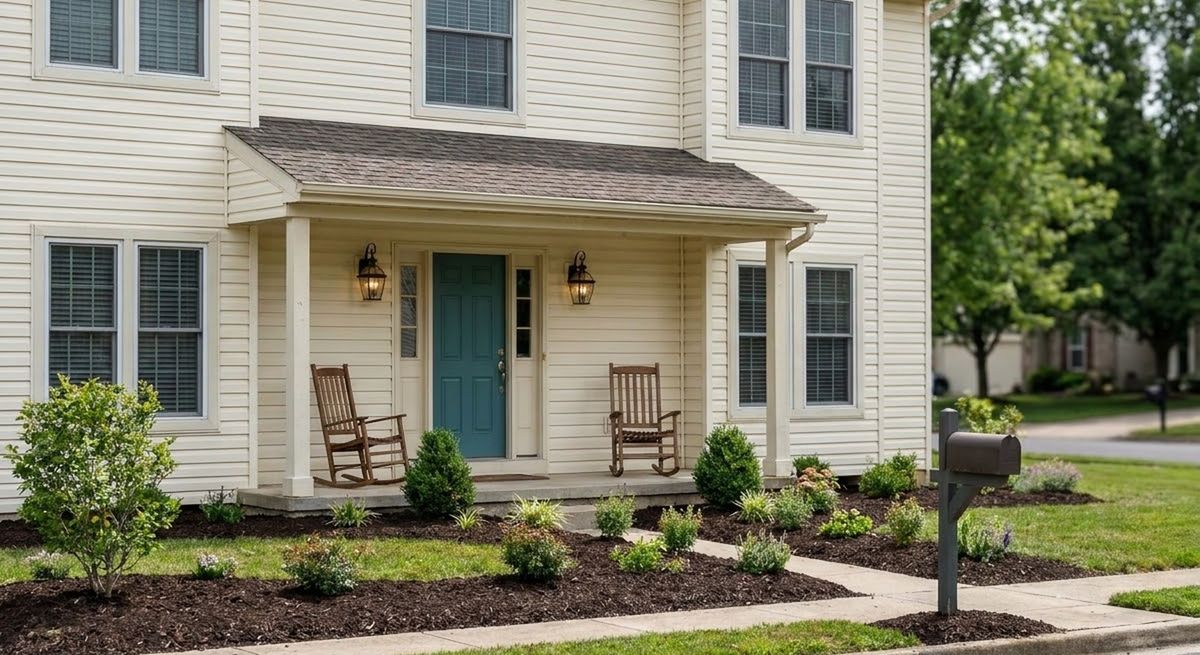
The cheapest curb appeal ideas are cleaning, paint and small details: pressure-wash the walkway and siding, paint the front door, add readable house numbers, lay fresh mulch and put in outdoor lighting. Most cost $10 to $150 in materials and take one afternoon or less. This guide lists 15 ideas with a cost range and time for each, and the order to do them in.
From the guide: Budget Home Improvement: Where to Spend and Where to Save
What are the best cheap curb appeal ideas?
The best cheap curb appeal ideas are the ones that clean, add contrast and light the entry: a washed exterior, a painted front door, clear house numbers, fresh mulch and outdoor lighting. This list gives 15 ideas with a materials cost range and time for each, plus the order to do them in. It is one part of a wider plan, so see the guide to budget home improvement for how exterior work fits with interior projects.
Costs are planning estimates based on typical retail prices for materials only. They are not from a survey, and prices vary by region and store. Price your own list before you buy.
How should you choose what to do first?
Start with cleaning and repairs, then paint, then plants and accents. Dirt and damage undercut every other improvement, and cleaning is the cheapest step.
- Clean and repair: wash, clear gutters, fix loose or broken parts.
- Paint and cover: door, steps, shutters, garage door.
- Light and label: lighting, numbers, mailbox.
- Plant and mulch: beds, planters, edges.
- Add accents: mat, window boxes, path.
If you plan to sell, also see the data on the highest-return DIY projects.
What are 15 cheap curb appeal ideas?
1. Paint the front door
Cost: $30-$80. Time: 1 day.
A painted door is the strongest focal point on the facade. Follow the steps in the front door section below. A quart is usually enough for one door; check the coverage on the can. If your home was built before 1978, do not dry-sand old paint; test it or use lead-safe methods.
2. Replace the house numbers
Cost: $10-$60. Time: 30 minutes.
Numbers should be readable from the street and contrast with the wall behind them. Use a template and a level, and drill pilot holes in masonry with the right bit.
3. Spread fresh mulch
Cost: $40-$150. Time: 2-4 hours.
Mulch makes beds look finished and holds moisture. For trees and shrubs, Penn State Extension recommends a 2- to 4-inch layer of organic mulch and no more, and warns that piling mulch against a trunk (“volcano mulching”) is never recommended. Keep it back from tree trunks and siding.
4. Pressure-wash the driveway, walkway and siding
Cost: $0-$100 (rental). Time: 3-6 hours.
Cleaning is the cheapest dramatic change. Use a wide fan tip on siding and keep the spray level so water does not get behind it. Do not use it on soft wood or loose paint.
5. Add outdoor lighting
Cost: $30-$150. Time: 1-3 hours.
Solar path lights and plug-in or battery wall lanterns need no wiring, and LED bulbs use at least 75% less energy than incandescent bulbs and last 25 times longer, per the Department of Energy. Hardwired fixtures are electrical work: turn the breaker off, verify power is dead, follow the instructions and local code, or hire a licensed electrician.
6. Plant perennials and add planters
Cost: $50-$200. Time: 1 afternoon.
Choose plants rated for your climate and the light each bed gets. Plant in groups of three or five. Two matching planters by the door give a tidy look.
7. Refresh the mailbox
Cost: $15-$80. Time: 1-2 hours.
Clean, rust-treat and repaint, or replace a damaged box. Check your postal service’s rules on size, height and placement before replacing a post-mounted box.
8. Paint or restore porch steps
Cost: $40-$120. Time: 1-2 days with drying.
Use paint made for floors and steps, and add grit for traction. Replace any rotted or loose tread rather than painting over it.
9. Add window boxes
Cost: $30-$120. Time: 2 hours.
Mount boxes into framing with rated fasteners, and fill them with plants that suit the sun exposure. Lightweight liners reduce load.
10. Clean and repair gutters
Cost: $0-$60. Time: 2-4 hours.
Clogged or sagging gutters stain siding and look neglected. Follow the ladder rules in the safety section below. For second-story or steep work, hire a pro.
11. Replace the welcome mat and add porch decor
Cost: $20-$100. Time: 1 hour.
A new mat, a plant and a clean seat do more than a pile of decor. Keep the path to the door clear.
12. Paint or repair shutters
Cost: $20-$100. Time: 1 day.
Remove shutters if you can, scrape loose paint, prime and repaint. Replace cracked or warped ones. Pick a color that contrasts with the siding.
13. Build a simple garden path
Cost: $50-$250. Time: 1 weekend.
Stepping stones or gravel with edging guide visitors to the door. Call 811 a few business days before you dig so utilities can mark buried lines.
14. Refresh the garage door
Cost: $20-$150. Time: 1 day.
Wash it, repaint a worn door, and replace worn weatherstripping or hardware. Do not attempt to adjust or repair springs and cables; they are under high tension and are a job for a pro. A garage door replacement averaged $4,672 and recouped 268% in the 2025 Cost vs. Value report, so a clean, working door is worth the effort.
15. Edge the lawn and trim shrubs
Cost: $20-$100. Time: 3-5 hours.
Crisp edges along walks and beds look intentional. Trim shrubs away from windows and the entry so they do not hide the house. See the lawn basics below for mowing height and watering.
How do you paint a front door step by step?
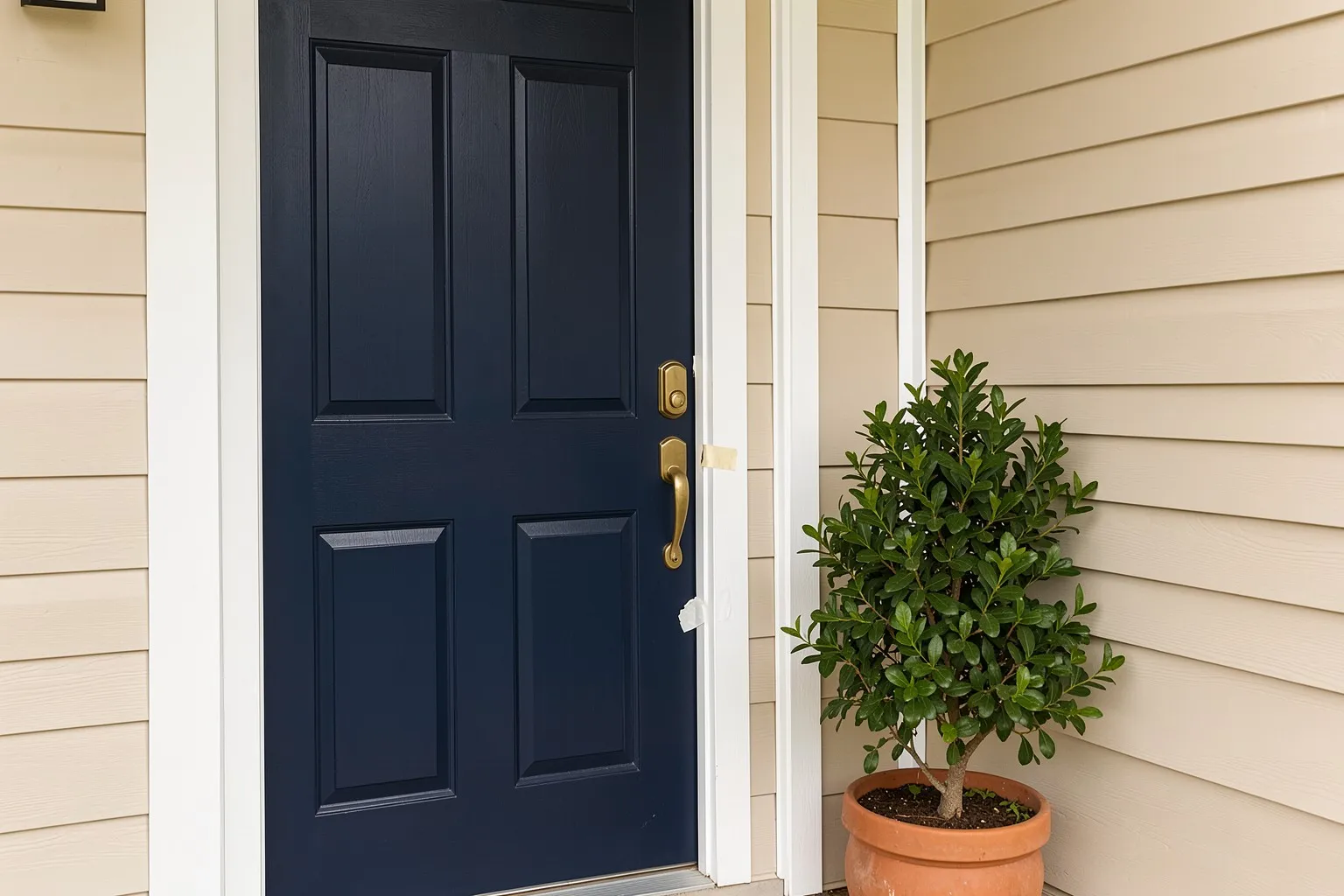
Wash, sand lightly, tape, prime if needed, then paint with exterior paint in thin coats. Sherwin-Williams’ front-door guide gives this sequence:
- Remove the hardware if you can, then wash the door with a degreasing cleaner, rinse and let it dry.
- Sand lightly with a sanding sponge and wipe off the dust.
- Tape and protect the hinges, glass and any hardware you leave on.
- Prime if you are making a big color change or the surface is glossy or bare. Brush the recessed panels first with an angled brush, then roll flat areas with a mini roller.
- Paint in the same order, working into wet paint to avoid streaks. Add a second coat after the first dries to the can’s directions.
- Reinstall the hardware after the paint dries.
Use exterior paint that resists UV and weather, and a satin or semi-gloss sheen, which hides flaws and wipes clean. Paint in the early morning or late afternoon when you can, and check the can for temperature limits. The 2025 Cost vs. Value report found that replacing a steel entry door recouped 216% of its $2,435 average cost, so a clean, freshly painted door gets you part of that effect for the price of a quart.
What are the lawn and landscaping basics?
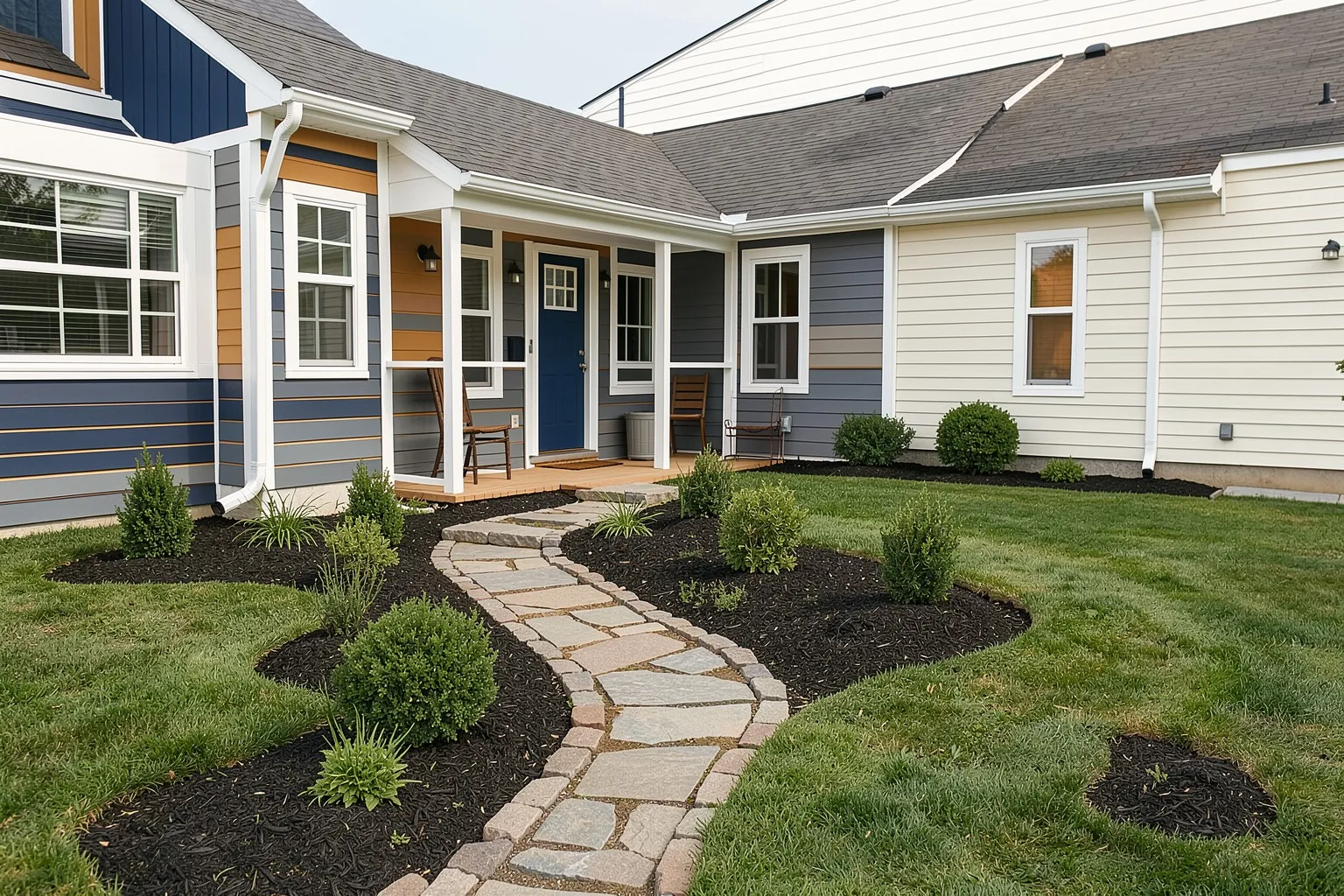
A healthy lawn and tidy beds do more for curb appeal than expensive plants. University of Maryland Extension gives these rules for established lawns:
- Mow high and often. Remove no more than one-third of the blade at a time. For a 3-inch lawn, mow when the grass reaches 4 inches. Target heights include 3 to 4 inches for tall fescue, 2.5 to 3.5 inches for Kentucky bluegrass, and 1.5 to 2.5 inches for zoysia.
- Sharpen the mower blade. Dull blades leave frayed, brown tips.
- Water deeply, not often. Actively growing grass does best with about 1 inch of water per week, from rain or irrigation. Water only when the soil is dry to the touch 4 inches down, and turn off irrigation in wet weather.
- Time fertilizer to your grass type, and check your county extension office for local rules and dates.
For beds, use plants rated for your climate zone and light, keep mulch 2 to 4 inches deep, and pull it back from trunks. Your county extension office usually offers free or low-cost guidance for your region.
What should you know about outdoor lighting?
Pick LED fixtures and bulbs, choose a warm color around 2700K for entries and paths, and use plug-in, battery or solar lights unless you will hire an electrician. The Department of Energy says LEDs use at least 75% less energy than incandescent bulbs, emit virtually no heat and last 25 times longer.
- Use outdoor-rated products. Check that the label says it is rated for damp or wet locations.
- Light the path and the door, not the whole yard. Place path lights where people step.
- Keep it simple. One wall lantern on each side of the door and a few path lights give a finished look.
- Hardwired lights are electrical work. Turn the breaker off, confirm power is dead with a non-contact tester and at the fixture, follow the manufacturer’s instructions and local code, or hire a licensed electrician. Digging for buried cable also requires an 811 call.
How do you work safely on exterior projects?
Two rules prevent the most serious problems: call 811 before you dig, and use ladders correctly.
Call 811 before you dig
Contact 811 a few business days before any digging, including planting shrubs, setting a mailbox post or building a path. Utilities mark the approximate location of their buried lines with paint or flags, and each utility has a color. Waiting periods vary by state. Call again for each new dig, because erosion and roots can shift lines, and make sure any hired landscaper has called too. Dig carefully around the marks, not on them.
Ladder safety
OSHA’s ladder guidance and the Ohio State fact sheet agree on these rules: set the ladder at the 4-to-1 angle (base 1 foot out for every 4 feet of height), extend it at least 3 feet above the surface you step onto, keep three points of contact, inspect it before each use, set it on level ground and do not overreach. The Consumer Product Safety Commission adds that you should have a helper hold the base, never stand on the top rung, and keep the ladder away from power lines. It also says that people 65 and older are 80% more likely than other adults to visit an emergency room for injuries involving ladders or stools.
Older paint
If your home was built before 1978, test peeling paint for lead before you scrape or sand. EPA’s lead-safe rule covers paid contractors; EPA recommends lead-safe practices for DIYers too.
What mistakes should you avoid?
Most curb appeal mistakes come from skipping prep or mixing too many colors. Avoid these:
- Painting over dirt or loose paint. It peels within a season.
- Too many colors. Use two or three, and match metal finishes.
- Mulch piled against trunks or siding. It traps moisture.
- Ignoring repairs. New paint on rotted wood looks worse in a year.
- Unsafe ladder use. Falls can cause injuries from bruises to fractures and death, per CPSC; take your time and have a helper.
What should you do each season?
Spring suits cleaning, mulch and planting. Summer suits painting in dry weather. Fall suits gutters, leaf cleanup and bulbs. Winter suits planning and indoor prep, plus clearing walks safely. Always check the paint can for the allowed temperature range.
For ideas inside the house, see the list of affordable home upgrades by budget, and for pacing your spending, read the guide to planning a budget renovation. More small jobs are in the weekend projects under $100.
| Idea | Typical cost | Time | Skill |
|---|---|---|---|
| 1. Paint the front door | $30-$80 | 1 day | Beginner |
| 2. New house numbers | $10-$60 | 30 minutes | Beginner |
| 3. Fresh mulch | $40-$150 | 2-4 hours | Beginner |
| 4. Pressure-wash | $0-$100 (rental) | 3-6 hours | Beginner |
| 5. Outdoor lighting | $30-$150 | 1-3 hours | Beginner (plug-in or solar) |
| 6. Perennials and planters | $50-$200 | 1 afternoon | Beginner |
| 7. Mailbox refresh | $15-$80 | 1-2 hours | Beginner |
| 8. Porch and step paint | $40-$120 | 1-2 days | Beginner |
| 9. Window boxes | $30-$120 | 2 hours | Beginner |
| 10. Gutter cleaning and repair | $0-$60 | 2-4 hours | Intermediate (ladder) |
| 11. Welcome mat and porch decor | $20-$100 | 1 hour | Beginner |
| 12. Shutter paint or repair | $20-$100 | 1 day | Beginner |
| 13. Garden path | $50-$250 | 1 weekend | Intermediate |
| 14. Garage door refresh | $20-$150 | 1 day | Beginner |
| 15. Lawn edging and trimming | $20-$100 | 3-5 hours | Beginner |
If you have one afternoon and $100, do the door, the numbers, mulch and a wash. If you have a weekend and $300, add lighting, planters and a garden path.
Questions and answers
What is the fastest way to improve curb appeal?
Clean first. Pressure-washing the driveway, walkway, siding and porch, trimming the lawn edges and removing clutter makes the biggest visible change in a few hours for little or no money. Then paint the front door and add fresh mulch. Buyers and visitors notice cleanliness and contrast at the entry before they notice anything else, so start there.
How much does it cost to boost curb appeal?
A basic refresh costs about $100 to $300 in materials: a painted door, house numbers, mulch, a wash and a few plants. Adding lighting, a garden path or paint on shutters and steps can bring it to $500. These are planning estimates from typical retail prices, not a survey, so price your own list. Full replacements cost far more; a steel entry door averaged $2,435 in the 2025 Cost vs. Value report.
Which inexpensive front porch ideas work best?
Paint the door and steps, replace the welcome mat, add two planters and fix the lighting. These four changes make a porch look cared for. Keep colors to two or three, and match metal finishes on numbers, lights and door hardware. Add seating only if the porch has room for it without blocking the path to the door.
Can I improve curb appeal without a professional?
Yes. Most of the ideas here are beginner jobs with basic tools: paint, mulch, planters, house numbers, mats and cleaning. Hire a pro for work at height beyond a stepladder, any wiring that is not plug-in or solar, tree removal near power lines, and repairs to structural parts like porch framing. Use a ladder safely and follow the manufacturer's directions on every product.
How often should I update curb appeal?
Refresh the small things yearly and the larger things every few years. Mulch, plants, a wash and trimming are seasonal. Paint on a front door and steps often lasts several years depending on sun and weather, so re-coat when it chips or fades. Gutters are commonly cleaned once or twice a year, more often under trees. Check your home after each storm.
Do curb appeal upgrades increase home value?
They can help a home sell faster and at a stronger price, but results vary by market and no number is guaranteed. The 2025 Cost vs. Value report found that replacing an entry door recouped 216% of its cost and a garage door 268%, while those are replacements, not paint. Ask a local agent which updates buyers in your price range notice.
Do I need to call 811 before planting or building a garden path?
Yes. Call 811 a few business days before any digging, including planting trees and shrubs, setting a mailbox post, building a fence or laying a path. Utilities mark the approximate location of buried lines with paint or flags, and some lines are only inches deep. Notice times vary by state. Call again for each new dig, and make sure any landscaper you hire has called as well.
How should I use a ladder safely for exterior work?
Set the ladder on firm, level ground with the base 1 foot out for every 4 feet of height, extend it 3 feet above the roof edge or landing, and keep three points of contact. Inspect it before each use, do not overreach, never stand on the top rung, keep it away from power lines, and have a helper hold the base. CPSC says adults 65 and older are 80% more likely than other adults to visit an emergency room for injuries involving ladders or stools.
What is the best color for a front door?
Pick a color that contrasts with your siding and works with your roof and brick or stone. Deep blues, greens and reds and black are common choices on light siding, and lighter tones suit dark siding. Test a sample on the door and look at it in morning and evening light before committing. Use exterior paint with the right finish for doors.
Our sources
- Cost vs. Value Report 2025 (Zonda / Remodeling, hosted by JLC) (jlconline.com)
- OSHA: Falling Off Ladders Can Kill: Use Them Safely (OSHA 3625) (osha.gov)
- Ohio State University Extension: Ladder safety fact sheet (ohioline.osu.edu)
- CPSC: Outdoor Repairs Home Safe checklist (ladders and power tools) (cpsc.gov)
- 811: Before you dig (national call-before-you-dig service) (811beforeyoudig.com)
- Penn State Extension: Mulching landscape trees (extension.psu.edu)
- University of Maryland Extension: Maintaining an established lawn (extension.umd.edu)
- Sherwin-Williams: How to paint a front door (sherwin-williams.com)
- U.S. Department of Energy: Guide to Energy-Efficient Lighting (energy.gov)
- EPA: Renovation, Repair and Painting Program (epa.gov)
Related reading
- Budget Home Improvement: Where to Spend and Where to Save
Plan budget home improvement the smart way: what to fix first, which jobs you can DIY, what pays back, with a cost, difficulty and payoff table.
- DIY vs Hiring a Pro: When Doing It Yourself Actually Saves Money
Is DIY cheaper than hiring a pro? Count tools, time and mistakes, find your break-even hourly value, and see which jobs rarely pay off and which do.
- Tile Calculator: How Many Tiles and Boxes for Floor, Wall or Backsplash
Work out how many tiles and boxes a floor, wall or backsplash needs: area formula, grout joint, waste by pattern, thinset coverage and a worked example.
- Affordable Home Upgrades by Budget: $100, $500 and $1,500 Ideas
Affordable home upgrades sorted by budget: what $100, $500 and $1,500 buys, with cost ranges, time, skill level and a comparison table.
- Budget Renovation Tips: How to Plan, Save and Avoid Overspending
Budget renovation tips for setting a budget, adding a contingency, choosing what to save or splurge on, deciding DIY versus pro, and permits.
- Budget Kitchen Makeover: Ideas by Budget Tier
Plan a budget kitchen makeover by tier, from paint and hardware to lighting and backsplash, with a paint vs reface vs replace cabinet comparison.