When to Call an Electrician: DIY Limits for Home Electrical Projects
Call a licensed electrician for any job that adds or moves wiring, touches the service panel, involves aluminum, knob-and-tube or damaged wiring, or shows warning signs such as hot plates, buzzing, scorch marks or a burning smell. Homeowners can usually handle only like-for-like swaps of a switch, receptacle or fixture with the breaker off and the wires tested dead.
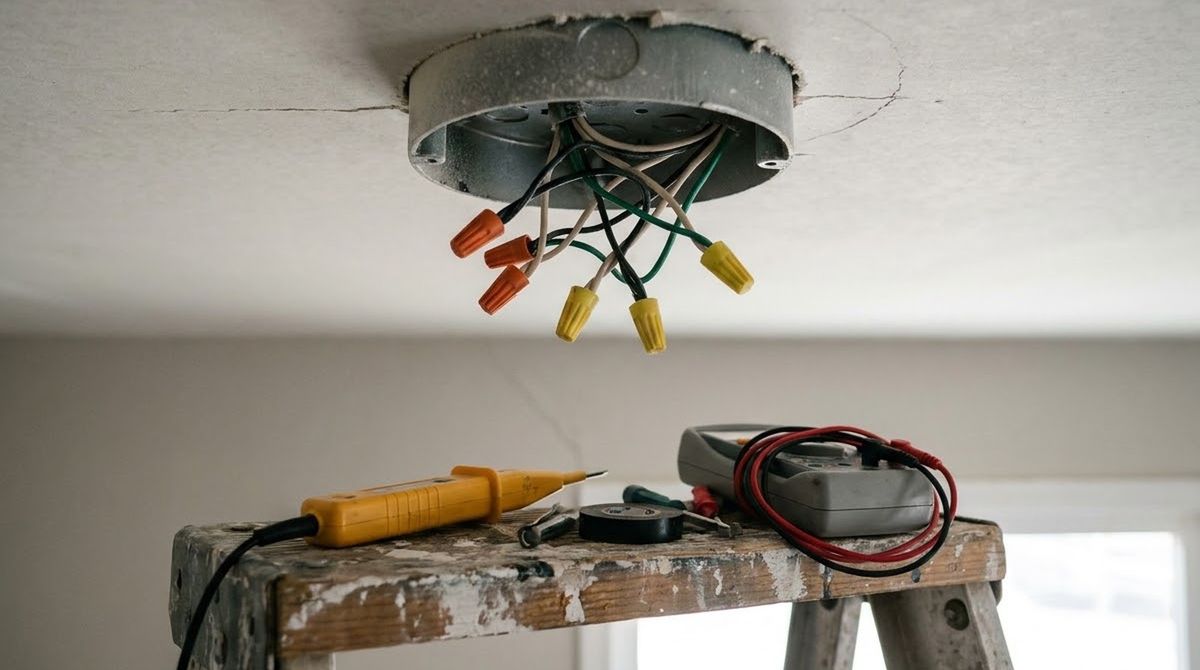
From the guide: DIY Electrical Work: What You Can (and Can't) Do Yourself
General information only, not professional advice. Electrical work can cause shock, burns and fire. Codes and permit rules differ by place. When in doubt, hire a licensed electrician.
This page is part of our guide to DIY electrical work. Use it to decide which side of the line a job falls on before you pick up a tool.
What electrical jobs can a homeowner do?
A homeowner can usually do small like-for-like swaps on an existing circuit: a cover plate, a standard switch or receptacle, or a light fixture on an existing box. Do them only with the breaker off and the wires tested dead. The table above sorts the common jobs.
The Electrical Safety Foundation International (ESFI) strongly recommends hiring a qualified, licensed electrician for any electrical work in your home, because most homeowners lack the training and experience to do it safely.
The word that matters is “existing.” Replacing a device does not change the circuit. Adding a device, a light or a circuit does, and that changes the risk, the code rules and usually the paperwork.
Even a swap can turn into a pro job when you open the box. If you find the wrong wire type, no ground, damaged insulation, or wires you cannot identify, stop. Our light switch guide lists the specific stop signs for that job.
Which electrical jobs always need a licensed electrician?
Panel work, breaker replacement, service upgrades, new circuits, aluminum or knob-and-tube repairs, and damaged or overheating wiring need a licensed electrician. Check whether your area lets owners do these at all. Where it does, the risk is still high.
- The service panel. OSHA notes that a panel with its disconnect open is “not technically de-energized” because there is still power to the supply side of the disconnect. Leave the panel cover on and treat panel work as a trained-person job, not a beginner project.
- New circuits and big loads. EV chargers, hot tubs, generator connections, ranges and dryers involve heavy loads and code details such as wire size and breaker rating.
- Old wiring. Aluminum, knob-and-tube and cloth-covered wiring need an expert’s assessment.
- Wet and outdoor locations. Moisture changes the rules and the hazard.
If you want to understand why a job needs a pro, ask the electrician to walk you through it. A good one will.
What are the warning signs you need an electrician now?
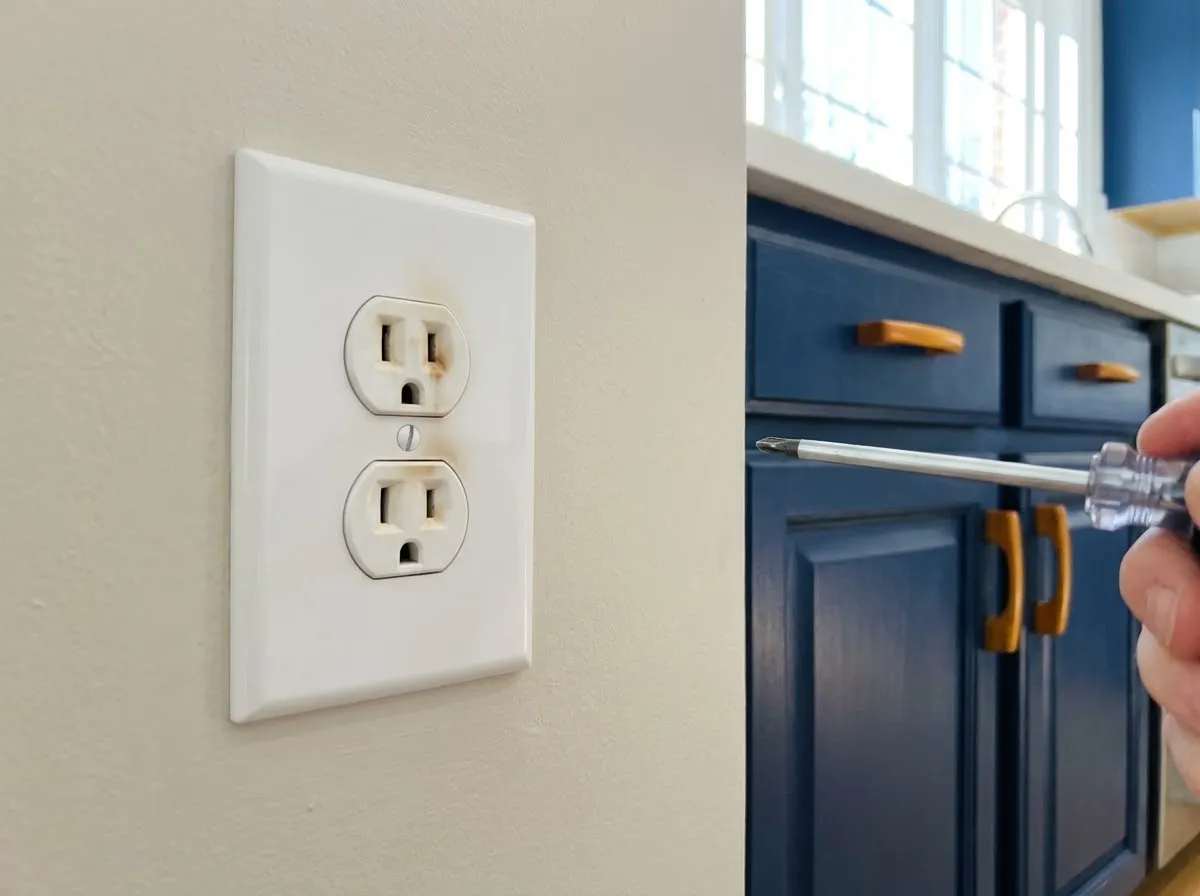
Hot-to-the-touch cover plates, flickering lights, circuits that stop working, and the smell of burning plastic at an outlet or switch are warning signs of an electrical problem. The U.S. Consumer Product Safety Commission (CPSC) lists these and tells owners to have a qualified electrician find the cause, not to attempt it themselves.
ESFI lists related signs, including dim and flickering lights, unusual sizzling and buzzing sounds, and breakers that trip repeatedly, and says to contact a qualified electrician immediately. It estimates home electrical fires cause about 51,000 fires and nearly 500 deaths a year.
Other red flags are buzzing or crackling, scorch marks, breakers that trip repeatedly, and outlets that feel warm. Treat them as urgent:
- If you smell smoke or see flames, leave and call 911.
- If it is safe to reach the panel, switch off the affected circuit.
- Do not touch the plate or outlet to “check” it.
- Call a licensed electrician and describe the symptoms.
Is your wiring old, aluminum or unsafe?
Aluminum branch-circuit wiring was used in some homes built from about 1965 into the mid-1970s, and CPSC found that aluminum-wired homes built before 1972 were 55 times more likely to have outlet connections reach fire-hazard conditions than copper-wired homes. Have a pro inspect it.
CPSC says aluminum connections can fail with no warning signs, so symptoms are not a reliable guide. You can read the markings on exposed cable in a basement, attic or garage. “Al” or “Aluminum” means aluminum, while “CU-clad” or “Copper-clad” means copper-coated aluminum, which CPSC’s repair advice does not cover. If you cannot tell, ask an electrician.
CPSC approves only three permanent repair methods: full replacement with copper, the COPALUM crimp method, and the AlumiConn connector method. Devices rated for copper only, which includes many standard switches, must not be connected to aluminum wire. Leviton’s standard switch sheet says to use the device with copper or copper-clad wire only.
Do you need a permit for electrical work?
Permit rules depend on your state and your city, so ask your local building department or state licensing board. ESFI says permits are generally not mandated for minor repairs such as replacing a receptacle where one already exists, but adding a receptacle, light fixture or circuit commonly requires one.
Here are two official examples, not a rule for everywhere:
- South Dakota requires an approved homeowner permit before any electrical work starts. The exemption applies only to a home you own and live in, and the work needs a rough-in inspection before it is covered and a final inspection.
- Washington says owners should buy a permit only if they will do the work themselves, and it strongly encourages hiring a licensed electrical contractor. It also says not to cover electrical work before it is inspected.
The permit is not just paperwork. The inspection is a second check by someone trained to look for mistakes. If you hire a contractor, the contractor normally pulls the permit. Ask who will, and ask for it in the quote.
How do you make a DIY job safer?
Make a job safer by following one order every time: turn off the breaker, test that the power is off, then work. Leviton’s instruction sheet says to turn off power at the circuit breaker or fuse and test that the power is off before wiring.
- Switch off the breaker, and put tape and a note on the panel so no one turns it back on.
- Test every wire in the box with a non-contact voltage tester. Klein’s instructions say to verify the tester on a known working circuit before and after each use, and that a no-voltage indication does not guarantee there is none.
- After you disconnect the device, test the wires with a multimeter you have checked on a known live source (Fluke). ESFI says to test from the black wires to the grounded box and to the white wires, and from the white wires to the grounded box.
- Follow the manufacturer’s instructions and local code, including the ground connection.
- Photograph the wiring before you disconnect anything.
Do not trust breaker labels alone, since one box can contain wires from more than one circuit. If a tester shows voltage when you did not expect it, stop and get a pro. Our home repair tool kit guide covers the testers and hand tools worth owning.
How do you hire a licensed electrician on a budget?
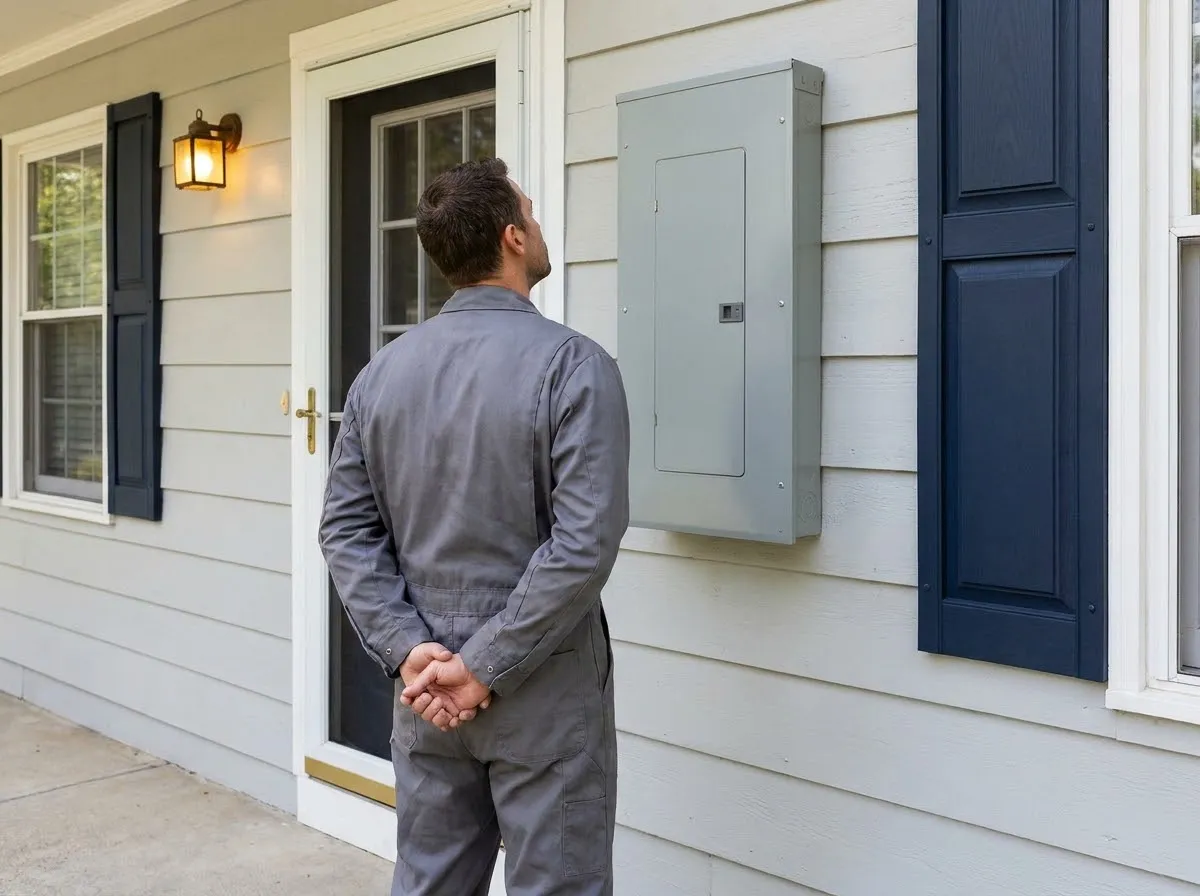
Get two or three written quotes, verify each license with your state board, and bundle small jobs into one visit. Do not skip the permit to save money. Skipping it removes the inspection that ESFI says many state and local laws require. Ask your local building department what applies.
You can still save safely: do the non-electrical parts yourself, such as patching and painting around a new box, and have the electrician handle the wiring. For help planning where DIY saves money, see our guide to guide to budget home improvement and the DIY home repair for beginners page. Costs for electricians vary a lot by region and job, so we do not quote a figure here.
What can go wrong with DIY electrical work?
The main risks are electric shock, burns, and a hidden connection that overheats later and starts a fire. The first is immediate. The second is the reason a job that “works” can still be wrong.
A loose terminal, a wire stripped too short or too long, or a device that does not match the wire type can all pass a quick test of “the light comes on.” CPSC explains that increased resistance at a connection causes overheating, and that this damage is cumulative. That is why manufacturers print the strip length and the screw torque on the device. Leviton’s switch sheet, for instance, gives about 5/8 inch of stripped insulation for back-wiring and a tightening torque of 14-18 inch-pounds.
Skill is only part of the answer. The other part is knowing what you cannot see: the condition of wire inside the wall, whether a box is overfilled, and whether the work meets the code your area enforces. An inspection or an electrician’s trained eye covers those blind spots.
What should you tell an electrician before the visit?
Describe the symptoms, when they started, and which rooms and circuits are affected, and mention the home’s age and any wiring you suspect. Clear information shortens the visit and helps the electrician bring the right parts.
- What you see, hear or smell, and whether it is constant or only under load.
- Whether breakers trip, and which ones.
- The age of the home and any past electrical work.
- Whether you have already opened any box, so the electrician knows what you touched.
- Photos of the panel label, the device and the wiring if you took them.
Do not “fix” the problem further before the visit, and do not tell the electrician the work was done by a professional if it was not. Honest history keeps everyone safer.
Is a cheap fix ever worth the risk?
Rarely, for anything above like-for-like swaps. A small saving on labor is a poor trade against the risk of a fire or an injury. A sensible compromise is to prepare the job yourself and pay the electrician only for the wiring.
Examples: clear the work area, move furniture, label the panel after the electrician confirms circuits, and patch drywall afterward. These cut the pro’s time without putting you at risk.
Where to go next
If cost is the temptation, compare it honestly first: the DIY vs hiring a pro guide shows how to count time and mistakes, not only parts.
The full cluster starts at the DIY electrical basics guide. If your job is a single-pole switch with copper wiring and a ground in a sound box, the step-by-step guide to replacing a light switch walks you through it.
| Job | DIY-ok (breaker off, tested dead) | Permit usually needed | Pro only |
|---|---|---|---|
| Replace a cover plate | Yes | No | No |
| Replace a standard switch like for like (copper wiring, ground present) | Yes | Rarely; check locally | No |
| Replace a standard receptacle like for like | Yes, if wiring is sound | Rarely; check locally | If wiring is damaged or aluminum |
| Replace a light fixture on an existing, supported box | Yes | Rarely; check locally | If the box or wiring is in poor shape |
| Install a smart switch that needs a neutral | Only if a neutral is already in the box | Rarely | If no neutral, or wires are unclear |
| Add a new outlet, light or switch location | No | Yes, usually | Check local rules |
| Add a new circuit, EV charger, hot tub or generator connection | No | Yes, usually | Recommended |
| Install recessed lights or a ceiling fan with new wiring | No | Yes, usually | Recommended |
| Replace a breaker or work inside the panel | No | Check locally | Yes |
| Service upgrade or meter work | No | Check locally | Yes; ask your utility about meter work |
| Repair aluminum, knob-and-tube or damaged wiring | No | Check locally | Yes |
| Anything with scorch marks, buzzing, heat or a burning smell | No | No | Yes, immediately |
Do only the first rows yourself, and only after you turn off the breaker and prove the wires are dead. Everything from adding wiring downward is a permit-or-pro job. Permit rules vary by state and city, so confirm locally.
Questions and answers
When should you call an electrician?
Call an electrician when a job adds or moves wiring, involves the service panel, or shows damage or warning signs such as hot cover plates, flickering lights, buzzing, tripping breakers or a burning smell. Also call one when you cannot identify the wires, cannot prove the circuit is off, or find aluminum, cloth-covered or brittle wiring.
What electrical work can a homeowner legally do?
It depends on your state and city. South Dakota and Washington allow owners to do their own work under specific conditions, with a permit and inspection. South Dakota does not allow the owner exemption for rental or commercial property. Other places may differ. Ask your state licensing board and local building department what applies to you before you start.
Do I need a permit to replace an outlet or switch?
ESFI says permits are generally not mandated for minor repairs, such as replacing a receptacle where one already exists, but rules vary and adding a receptacle, light or circuit commonly requires one. The permit also triggers an inspection, which catches mistakes you cannot see. Call your local building department and ask before you start. If you hire an electrician, they normally handle the permit.
What are the signs of bad wiring in a house?
The Consumer Product Safety Commission lists hot face plates on receptacles or switches, flickering lights, circuits that do not work, and a burning-plastic smell at outlets or switches. Frequently tripped breakers, buzzing and discolored plates are also red flags. Turn off the circuit if you can do so safely, keep clear, and call a qualified electrician.
Is it dangerous to work on electrical wiring yourself?
Yes, it can be. Shock, burns and fires are real risks, and a wiring mistake can stay hidden in a wall for years. The danger drops sharply when you work only on small like-for-like jobs, turn off the breaker, test that the wires are dead, and follow the device manufacturer's instructions. It rises quickly for panel work and old or aluminum wiring.
Can I trust the labels on my breaker panel?
Not without testing. Do not rely on labels, and remember one box can contain wires from more than one circuit. After you switch a breaker off, test every wire in the box before you touch it, and again at the device. If any wire reads live, stop and find the other circuit before continuing.
How do I find a licensed electrician?
Search your state licensing board's lookup for the contractor's license number and status, then ask for it in writing. Ask who will pull the permit, whether the quote covers inspection, and for proof of insurance. Get two or three written quotes and be wary of anyone who suggests skipping a required permit.
What if my home has aluminum wiring?
Do not repair it yourself. The Consumer Product Safety Commission says homes built before 1972 with aluminum wiring were 55 times more likely to have outlet connections reach fire-hazard conditions. It recommends permanent repair by a qualified electrician, using complete copper replacement, the COPALUM method, or the AlumiConn connector method.
Our sources
- ESFI: DIY electrical safety (esfi.org)
- ESFI: Home electrical fires facts and statistics (esfi.org)
- U.S. CPSC Publication 516: Repairing Aluminum Wiring (cpsc.gov)
- South Dakota Department of Labor and Regulation: Homeowner wiring permits (dlr.sd.gov)
- Washington L&I: Purchase electrical permits and request inspections (lni.wa.gov)
- Leviton Decora 5601/5603 single-pole and 3-way switch installation sheet (leviton.com)
- ESFI: Do-it-yourself (DIY) electrical safety tips (esfi.org)
- ESFI: Home Electrical Safety workbook (permits, testing wires before touching) (esfi.org)
- Klein Tools NCVT-7 non-contact voltage tester instructions (data.kleintools.com)
- Fluke: Guide to digital multimeter safety (fluke.com)
- OSHA letter of interpretation, 2006-07-28 (work in electrical panels; supply side of a disconnect) (osha.gov)
- OSHA 29 CFR 1910.333: Selection and use of work practices (testing to verify de-energized) (osha.gov)
Related reading
- DIY Electrical Work: What You Can (and Can't) Do Yourself
A safety-first guide to DIY electrical work: which jobs homeowners can do, which need a permit, which need a licensed electrician, and the tools.
- How to Install a Light Switch: Replace a Single-Pole Switch Safely
Learn how to install a light switch: replace a single-pole switch step by step with the breaker off, plus when to stop and call an electrician.