Tile Calculator: How Many Tiles and Boxes for Floor, Wall or Backsplash
To find how many tiles you need, divide the area by the area one tile covers including its grout joint, add a waste allowance for cuts and breakage, and round up to whole boxes. An 80 sq ft floor of 12 x 12 in tiles with 1/8 in joints needs about 78 tiles before waste and 9 boxes of 10 after a 10 percent allowance.
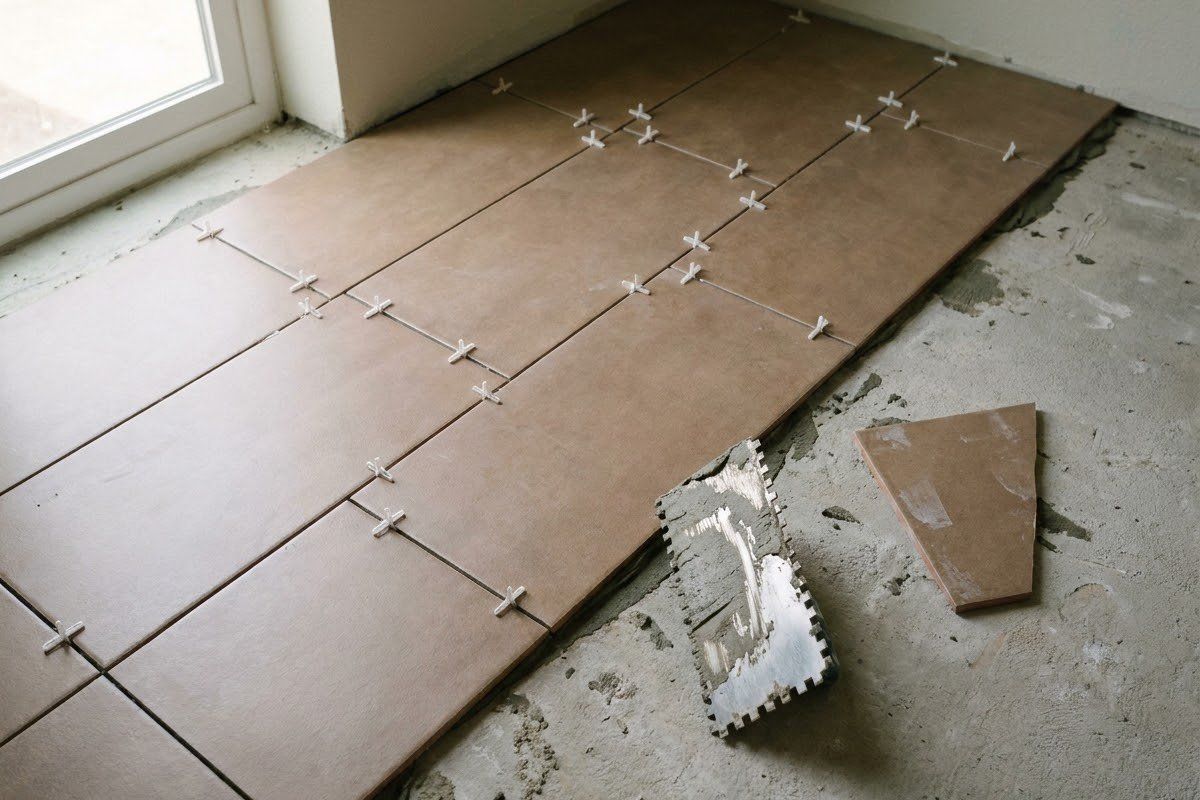
From the guide: Budget Home Improvement: Where to Spend and Where to Save
How many tiles do you need?
Divide the area by the area one tile covers with its grout joint, add a waste allowance, and round up to whole boxes. For an 80 sq ft floor of 12 x 12 in tiles with 1/8 in joints, that is about 78 tiles before waste and 87 after a 10 percent allowance, which is 9 boxes of 10.
Our free tile quantity tool runs these steps for any size and shows the box count. This page explains each step so you can sanity-check the result. It belongs to our budget home improvement guide, where tile is one of the upgrades that pays back in daily use.
How do you measure the area and tile size?
Multiply length by width for each rectangular area and add the areas. Split L-shaped rooms and backsplashes into rectangles, and measure to the finished edge, not to the wall behind a cabinet.
- Floor: length × width
- Wall or backsplash: width × height, minus any window or outlet cut-outs you choose to deduct
- Tile area: (tile width + joint) × (tile height + joint), in inches, divided by 144 for square feet
Convert metric sizes first: one inch is exactly 25.4 mm (NIST), so a 300 mm tile is about 11.8 in.
How much waste should you allow by pattern?
Straight layouts need the least, and diagonal, herringbone and small rooms with many cuts need more. Ten percent is a common planning figure for a straight layout, but it is a rule of thumb and not a standard. Edge cuts, breakage and a few spares for future repairs all use tile.
| Layout | Allowance to start from |
|---|---|
| Straight (grid) in a regular room | about 10% |
| Diagonal or offset | more than 10%; ask your installer |
| Herringbone or mosaic sheets | more than 10%; check the pattern guide |
| Backsplash with outlets and corners | about 10%, more if cuts are tight |
Whatever the figure, Daltile’s advice is to always round up to the next highest footage. These percentages are planning defaults, so confirm them with your tile supplier.
How many boxes should you buy?
Divide the tiles you need by the pieces per box and round up, or divide the square footage by the square feet per carton. Both numbers are on the carton or product page. The two figures differ from product to product, so never reuse a box count from a different tile.
Buy all the boxes at once and from the same lot number so color and size match. Keep a box or two sealed in case a return is needed.
How much thinset and grout do you need?
Use the coverage printed for the product you buy, because it changes with trowel size and tile. CUSTOM’s FlexBond data sheet lists 85 to 95 sq ft per 50 lb bag with a 1/4 in square-notch trowel and 60 to 67 sq ft with a 1/4 x 3/8 in trowel. It also states that mortar contact under the tile must be at least 80 percent in dry areas and at least 95 percent in wet areas, which large tiles may need back-troweling to reach.
For 80 sq ft with the larger trowel, the conservative figure of 60 sq ft per bag gives 80 ÷ 60 = 1.33, so buy 2 bags. Grout coverage depends on tile size, joint width and product, so read the grout bag.
Worked example: a 10 x 8 ft bathroom floor
- Area: 10 × 8 = 80 sq ft
- Tile with joint: (12 + 0.125)² ÷ 144 = 1.021 sq ft
- Tiles before waste: 80 ÷ 1.021 = 78.4
- With 10 percent: 78.4 × 1.10 = 86.2, round up to 87 tiles
- Boxes of 10: 87 ÷ 10 = 8.7, so 9 boxes (90 tiles)
- Thinset at 60 sq ft per bag: 2 bags
How do you budget the tile?
Multiply the box count by the price per box, then add thinset, grout, sealer, spacers, a trowel and a tile cutter or a rental. Prices vary widely, so we publish none. Enter your lines in the planner and add a contingency before you commit.
Two guides show tile in context: budget-friendly bathroom upgrades you can do in a day and the budget kitchen makeover. If the wall behind the tile needs repair first, see the drywall sheets guide.
Questions and answers
How much waste should I add when buying tile?
Ten percent is a common planning allowance for straight layouts, but it is a rule of thumb rather than a standard. Diagonal and herringbone patterns, small rooms with many cuts and rooms with built-ins use more, so ask your installer or supplier for a figure for your layout. Daltile's advice is to always round up to the next highest footage.
How many tiles are in a box?
It depends on the tile, so read the carton or product page: it lists the square feet and the number of pieces per box. Pieces per box and square feet per box change with tile size and maker. Divide your total tiles by pieces per box and round up to whole boxes.
How much extra do I need for diagonal tile?
More than for a straight layout, because every tile along the edges is cut at an angle and the offcuts are often unusable. There is no single published figure, since it depends on room shape and tile size. Add a larger allowance than your straight-layout figure, and ask the installer to estimate it from your room plan before you order.
How many square feet does a bag of thinset cover?
It depends on the product and the trowel. CUSTOM's FlexBond data sheet lists 85 to 95 sq ft per 50 lb bag with a 1/4 in square-notch trowel and 60 to 67 sq ft with a 1/4 x 3/8 in trowel. Larger tiles need larger notches and sometimes back-troweling, so use the chart for the bag you buy.
Do I need to account for the grout joint?
Yes, a little. Each tile plus half the joint on every side covers slightly more than the tile alone, so wide joints reduce the tile count. For a 12 in tile with a 1/8 in joint the covered area is 1.02 sq ft instead of 1.00. The effect is bigger for small mosaic tiles than for large tiles.
Is it cheaper to buy a bit more tile?
Usually yes. Tile from different production lots can differ in color and size, so buying a second box later may not match, and a discontinued tile cannot be replaced. Spare tiles also let you repair a cracked tile years later. Keep unopened extra boxes, check the return policy and keep the receipt before you open them.
Our sources
- Daltile, Find the Right Tile Pattern for Any Surface (helpful hints) (daltile.com)
- CUSTOM Building Products, FlexBond Premium Crack Prevention Thin-set Mortar: coverage chart (custombuildingproducts.com)
- NIST SP 811, Appendix B.8: conversion factors for units (nist.gov)
Related reading
- Budget Home Improvement: Where to Spend and Where to Save
Plan budget home improvement the smart way: what to fix first, which jobs you can DIY, what pays back, with a cost, difficulty and payoff table.
- DIY vs Hiring a Pro: When Doing It Yourself Actually Saves Money
Is DIY cheaper than hiring a pro? Count tools, time and mistakes, find your break-even hourly value, and see which jobs rarely pay off and which do.
- Affordable Home Upgrades by Budget: $100, $500 and $1,500 Ideas
Affordable home upgrades sorted by budget: what $100, $500 and $1,500 buys, with cost ranges, time, skill level and a comparison table.
- Budget Renovation Tips: How to Plan, Save and Avoid Overspending
Budget renovation tips for setting a budget, adding a contingency, choosing what to save or splurge on, deciding DIY versus pro, and permits.
- Budget Kitchen Makeover: Ideas by Budget Tier
Plan a budget kitchen makeover by tier, from paint and hardware to lighting and backsplash, with a paint vs reface vs replace cabinet comparison.
- 15 Cheap Curb Appeal Ideas With Costs and Time Estimates
15 cheap curb appeal ideas with cost ranges and time for each, from a painted front door to mulch and lighting, plus the order to do them in.