Basic Home Repairs Every Homeowner Can Do Themselves
The basic home repairs every homeowner can do are patching small drywall holes, replacing a toilet flapper, clearing a clog with a plunger or hand auger, fixing a sticking or squeaky door, recaulking a tub, tightening loose hinges, and resetting a GFCI outlet. They need hand tools, cost little, and are easy to redo if they go wrong. Wiring, gas, and structural work do not belong on the list.
From the guide: DIY Home Repair for Beginners: What to Fix, What to Buy, When to Stop
Basic home repairs are small fixes that use hand tools and low-cost parts, and a beginner can complete them safely. This guide covers eleven of them, in the order you are likely to need them. It is part of our DIY home repair for beginners guide, which also covers tools and safety limits.
Every repair below ends with a stopping point: the sign that the job is bigger than it looked. Respect it, and a small repair stays a small repair.
| Repair | Skill level | Main tools |
|---|---|---|
| Know your shutoffs | Beginner | Flashlight, labels |
| Patch a small drywall hole | Beginner | Putty knife, sanding sponge |
| Fix a running toilet | Beginner | Adjustable wrench or hands |
| Clear a clogged drain | Beginner | Plunger, hand auger, bucket |
| Fix a sticking door | Beginner | Screwdriver |
| Silence a squeaky door | Beginner | Lubricant, nail or punch |
| Recaulk a tub or sink | Beginner to intermediate | Caulk gun, utility knife |
| Tighten a loose cabinet hinge | Beginner | Screwdriver, wood glue |
| Fix a stripped screw hole | Beginner | Toothpicks, wood glue |
| Stop a dripping faucet | Intermediate | Adjustable wrench, replacement part |
| Reset a GFCI outlet | Beginner | None |
Where are your water and power shutoffs?
Find and label your main water shutoff, the small valves under sinks and behind toilets, and your breaker panel before you need them. Almost every repair below goes better with the water off, and a burst pipe goes better when you already know where the valve is.
Walk the house once. Turn each fixture shutoff clockwise until it stops, check that the water stops, and turn it back on. Replace any valve that is stuck or leaking, or call a plumber. Do not force a corroded valve.
How do you patch a small hole in drywall?
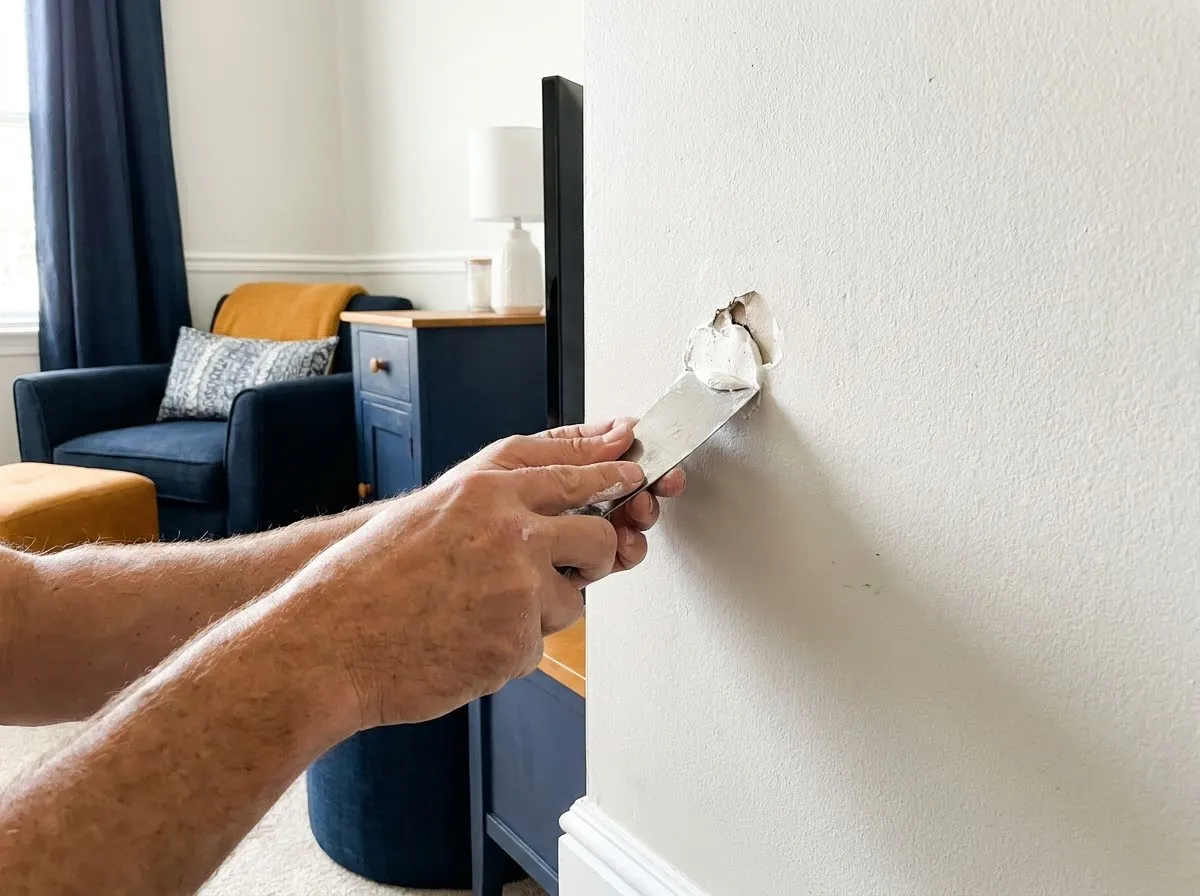
Fill the hole with spackle or joint compound in thin layers, sand it smooth, prime it, and paint. Nail holes and dings need only filler. Bigger holes need a patch behind the filler.
Steps
- Scrape off loose paper and bumps around the hole with a putty knife.
- For a hole bigger than a nail hole, press a self-adhesive mesh or metal patch over it.
- Spread a thin coat of joint compound over the patch, feathering the edges onto the wall.
- Let it dry fully, then apply a second thin coat slightly wider than the first.
- Sand lightly with a fine sanding sponge, wipe off the dust, prime, then paint.
Thin coats shrink less and crack less than one thick coat. Primer matters: unprimed compound soaks up paint and leaves a dull patch.
Stopping point: If the wall is soft, wet, or stained, find the leak first. If the house was built before 1978, the EPA says lead-based paint may be present, so avoid dry sanding painted surfaces, mist the surface before sanding or scraping as the EPA’s lead-safe steps advise, and read the EPA’s lead-safe guidance. Before you buy supplies for a bigger repair, the savings comparison tool shows whether doing it yourself is worth your time.
How do you fix a running toilet?
Replace the flapper, the rubber seal at the bottom of the tank. The EPA says most toilet leaks come from worn flappers and that household leaks waste more than 9,300 gallons a year in the average home.
Check for a leak first
Put a few drops of food coloring in the tank and wait. If color shows up in the bowl after 10 minutes without flushing, the tank is leaking into the bowl, per the EPA.
Replace the flapper
- Turn off the water at the shutoff behind the toilet and flush to empty the tank.
- Unhook the flapper from the overflow tube and its chain or ears.
- Take the old flapper to the hardware store to match its size and style.
- Attach the new flapper, adjust the chain so it has a little slack, and turn the water back on.
If the toilet still runs, the fill valve or float setting may be the cause. Follow the toilet maker’s instructions for that part.
Stopping point: Water around the base of the toilet, a rocking toilet, or a cracked tank means a plumber, not a flapper.
How do you unclog a drain without chemicals?
Use a plunger, a hair-removal strip or hand auger, or clean the trap. These clear most sink and tub clogs and avoid the burn risk of chemical cleaners.
Poison.org states that swallowing non-enzymatic drain cleaners can cause serious burns and advises goggles and rubber gloves when you use them. It also says baking soda and vinegar is unlikely to be strong enough for tough clogs. Never mix cleaning products, and do not plunge a drain that has chemical cleaner sitting in it, because splashes can cause injuries.
Steps
- Run water until it covers the plunger cup, then plunge with steady, firm strokes.
- For a tub or sink with hair, pull out the stopper and use a plastic drain strip or a hand auger.
- For a sink that is still slow, place a bucket under the trap, unscrew the slip nuts by hand or with pliers, and clear the trap.
- Reassemble, run water, and check for leaks at the joints.
Stopping point: If several fixtures back up at once, or sewage appears in a floor drain, the clog is in the main line. Call a plumber.
How do you fix a sticking door?
Tighten the hinge screws first, because a sagging hinge is the most common cause. If the door still rubs, find where, and then sand or plane only that spot.
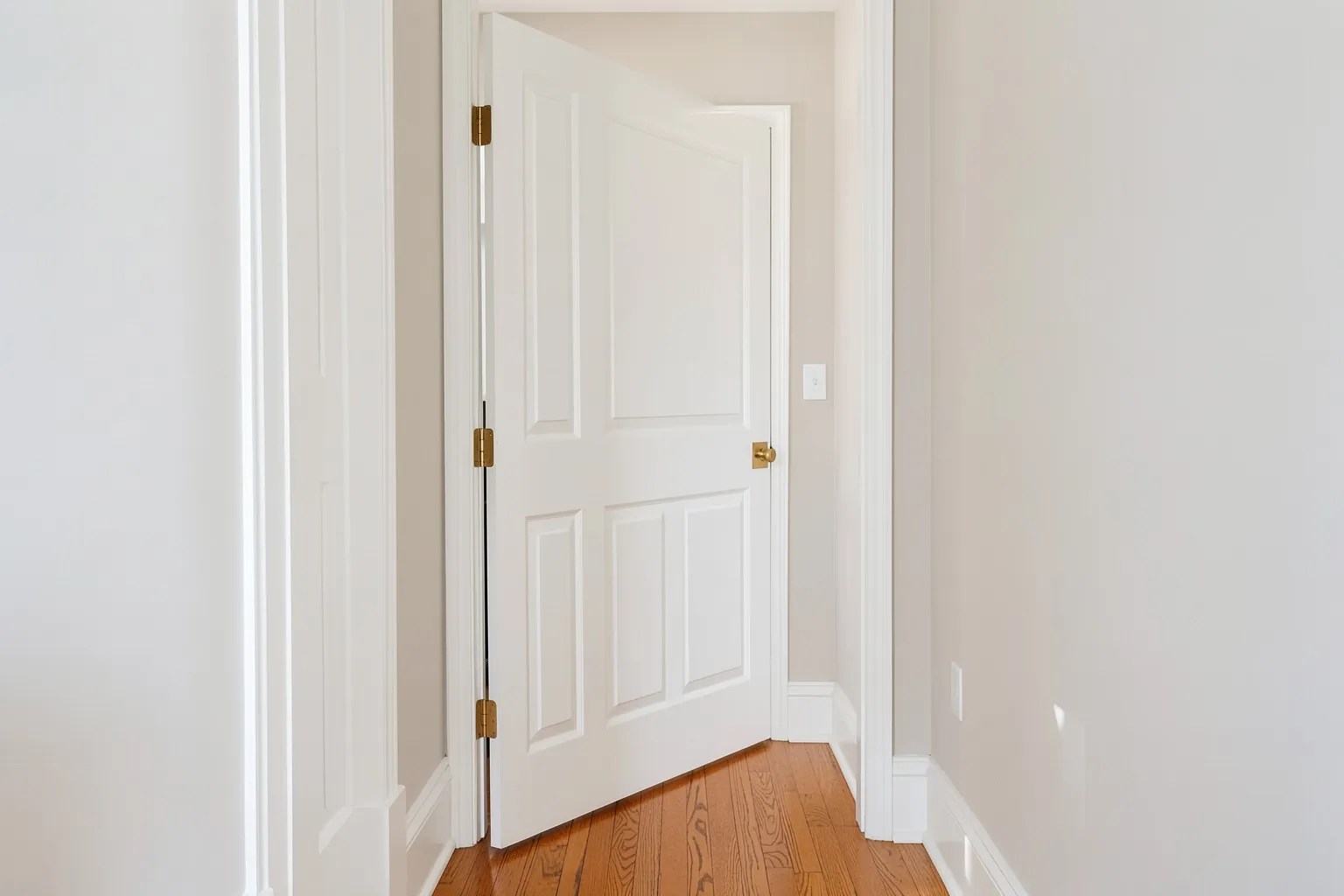
- Open the door and tighten every hinge screw on the jamb side and the door side.
- If a screw spins without gripping, use the stripped screw fix below.
- Close the door slowly and look for scuffs, or slide a sheet of paper around the edge to find where it binds.
- If it still rubs, remove the door, sand or plane the rubbing edge a little at a time, and seal any bare wood with paint or primer.
Doors swell in humid weather, so a door that sticks only in summer may need nothing more than a light sanding.
Stopping point: A door frame that is out of square or a gap that changes with every season points to a settling or moisture problem, not a door problem.
How do you stop a squeaky door?
Lubricate the hinge pins. A small amount on the pin removes most squeaks.
- Support the door, then tap each hinge pin up and out using a nail and hammer.
- Wipe the pin clean and apply a thin coat of silicone spray, petroleum jelly, or the lubricant the hardware maker recommends.
- Slide the pin back in and swing the door several times.
Work on one hinge at a time so the door stays supported.
How do you recaulk a tub or sink?
Remove all the old caulk, clean and dry the seam, and apply a continuous bead of new caulk. The Virginia Tech Cooperative Extension says surfaces should be clean and dry, and that caulk should go on in one continuous stream, filling the gap.
Steps
- Cut out the old caulk with a utility knife or caulk-removal tool, taking care not to scratch the tub.
- Clean the seam, treat any mildew with a cleaner made for it, and let it dry fully.
- Apply painter’s tape above and below the seam for a straight line.
- Cut the caulk tube tip at a small angle, and apply an unbroken bead along the seam.
- Smooth it with a gloved, damp finger or caulk tool and peel off the tape before the caulk skins over.
- Keep the area dry for the cure time printed on the tube.
Choose a caulk labeled for kitchens and baths. The same extension publication notes that caulk handles gaps up to about 1/4 inch and that premium caulks are designed to last 20 years or more, while cheaper ones may last only a few years. For other quick bathroom wins, see our one-day bathroom upgrades.
Stopping point: Soft or stained wood behind the old caulk means water has been getting in. Fix that before recaulking.
How do you tighten a loose cabinet hinge?
Tighten the hinge screws, and if they spin, re-anchor them. Most cabinet doors that hang crooked or rattle have a loose screw in a worn hole.
- Open the door and tighten the screws holding the hinge to the cabinet frame and the door.
- On adjustable hinges, use the small adjustment screws to move the door up, down, or sideways until the gaps are even.
- If a screw will not tighten, use the stripped screw fix below.
How do you fix a stripped screw hole?
Fill the hole with wood so the screw has something to bite. Dip a few toothpicks or a wooden matchstick in wood glue, push them into the hole, snap them off flush, and let the glue dry. Then drive the screw back in.
For a heavily damaged hole, a slightly longer screw of the same diameter also works. Do not overtighten, because that strips the hole again.
How do you stop a dripping faucet?
Replace the worn internal part. The EPA says a faucet dripping once per second wastes more than 3,000 gallons a year.
- Turn off the fixture shutoff valves and open the faucet to release pressure.
- Plug the drain so small parts cannot fall in.
- Remove the handle and take the faucet apart following the maker’s instructions.
- Take the worn washer, O-ring, or cartridge to the store to match it, or order the exact part from the manufacturer’s parts list.
- Reassemble, turn the water on slowly, and check for leaks.
Stopping point: If the faucet body is corroded or you cannot identify the model, replacing the faucet may be easier than repairing it.
How do you reset a GFCI outlet?
Press the reset button firmly. A ground fault circuit interrupter (GFCI) outlet is the type with TEST and RESET buttons, usually in kitchens, bathrooms, garages, and outdoors. It trips to prevent shock.
The CPSC says a GFCI senses a current imbalance as small as 0.006 amperes and cuts power faster than a blink. The CPSC also says to test every GFCI after installation, after a power failure, and at least once a month.
Test and reset
- Plug a lamp in and turn it on.
- Press TEST. The lamp should go out. If it does not, the CPSC says the GFCI is not working or was not installed correctly, so contact a qualified electrician.
- Press RESET. The lamp should come back on. If it does not, the CPSC says to replace the GFCI.
A GFCI can also protect other outlets downstream, so a dead outlet in the garage or bathroom may be fixed by a reset at a different outlet.
Stopping point: This is as far as a beginner goes. If the GFCI trips repeatedly, feels warm, or shows scorch marks, stop using the circuit and call an electrician. Anything beyond pressing the buttons, including replacing the device or any breaker work, is covered in our DIY electrical basics guide, and our page on home electrical limits explains when to hire a pro. If you eventually take on a like-for-like swap, start with how to install a light switch.
Which tools do you need for these repairs?
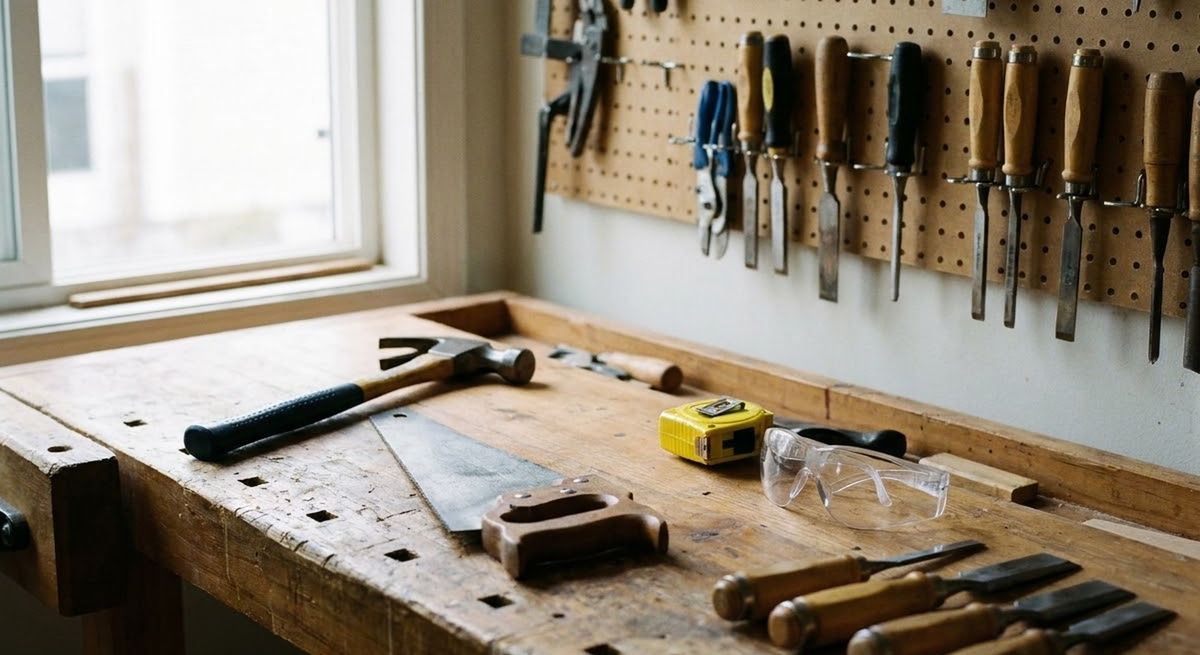
A small kit covers all eleven: a tape measure, screwdrivers, an adjustable wrench, pliers, a utility knife, putty knives, a caulk gun, a plunger, and a cordless drill. Add safety glasses and gloves.
Our home repair tool kit guide shows what to buy first, what to add later, and what to rent.
When should you stop and call a professional?
Stop when the job involves wiring, gas, structure, or a permit, or when the problem keeps coming back. These signs mean a bigger problem than a repair:
- Water stains, soft wood, or mold behind a patch or caulk line
- Several drains backing up at once
- An outlet or breaker that trips repeatedly, or anything that smells burnt
- Cracks that keep widening after repair
- Any work that would require cutting into a wall for wiring or gas
For help deciding what stays in your hands, return to the home repair hub.
Questions and answers
What are the most common home repairs?
The most common home repairs are patching holes in walls, fixing a running toilet, clearing slow or clogged drains, fixing a dripping faucet, recaulking around tubs and sinks, adjusting sticking or squeaky doors, and tightening loose cabinet hinges. All of them use basic hand tools. Electrical, gas, and structural repairs are also common but should go to licensed professionals unless the task is as small as pressing a GFCI reset button.
How do I fix a running toilet myself?
Lift the tank lid and watch what is happening. The most common cause is a worn flapper that no longer seals. Turn off the water at the toilet shutoff, flush to empty the tank, unhook the old flapper, and install a matching replacement. The EPA says most toilet leaks come from old or worn-out flappers.
How do I unclog a drain without chemicals?
Use a plunger first, with enough water to cover the cup. If that fails, pull out hair with a plastic drain-cleaning strip or a hand auger, and clean the trap under the sink with a bucket below it. Poison.org notes that swallowing non-enzymatic drain cleaners can cause serious burns and that baking soda and vinegar is unlikely to clear tough clogs, so mechanical clearing is the safer first choice.
Can I patch a hole in drywall without experience?
Yes. Small holes need only spackle or joint compound, a putty knife, light sanding, primer, and paint. Larger holes need a self-adhesive mesh or metal patch first so the compound has something to bridge. Work in thin coats and let each one dry fully. In a home built before 1978, do not dry sand painted surfaces, because old paint may contain lead.
How often should I recaulk a bathtub?
Recaulk when the caulk cracks, peels, shrinks away from the surface, or has mold that will not clean off. Lifespan depends on the product and the room. A Virginia Tech Cooperative Extension publication notes that premium caulks are designed to last 20 years or more, while cheap products may last only a few years. Remove all the old caulk and let the surface dry fully first.
What should I do when a GFCI outlet trips?
Press the reset button firmly. The CPSC says to test each GFCI at least monthly, and that if the reset button does not restore power, the device should be replaced. If it trips again right away, unplug everything on that circuit and try once more. If it still trips, stop and call an electrician rather than opening the outlet.
Which home repairs should I not do myself?
Leave new or altered wiring, breaker panel work, gas lines and appliances, structural walls, and roof work to licensed professionals, and check whether your local code requires a permit. Also stop if you find water damage or mold behind a wall, or if the same repair fails twice. A repair you cannot safely undo is a job for a pro.
Our sources
- EPA WaterSense: Fix a Leak Week (epa.gov)
- EPA WaterSense: Residential Toilets (epa.gov)
- U.S. CPSC: GFCI Fact Sheet (Pub. 099) (cpsc.gov)
- Poison.org: What's in drain cleaner and what happens if you drink it? (poison.org)
- Virginia Tech Cooperative Extension: What about Caulking and Weather-Stripping? (pubs.ext.vt.edu)
- EPA: Renovation, Repair and Painting Program (epa.gov)
- EPA: Steps to Lead-Safe Renovation, Repair and Painting (epa.gov)
Related reading
- DIY Home Repair for Beginners: What to Fix, What to Buy, When to Stop
A beginner's guide to DIY home repair: the fixes worth learning, the starter tools, and the safety limits that tell you when to call a licensed pro.
- How Many Sheets of Drywall Do I Need? Walls, Ceilings, Mud and Tape
Work out how many drywall sheets, how much joint compound and tape a room needs, with the area formula, waste allowance and a worked 12 x 12 ft example.
- Home Repair Tool Kit: What You Actually Need and What to Skip
Build a home repair tool kit in three stages: the starter tools to buy now, what to add later, and what to rent, with a voltage tester for safety.