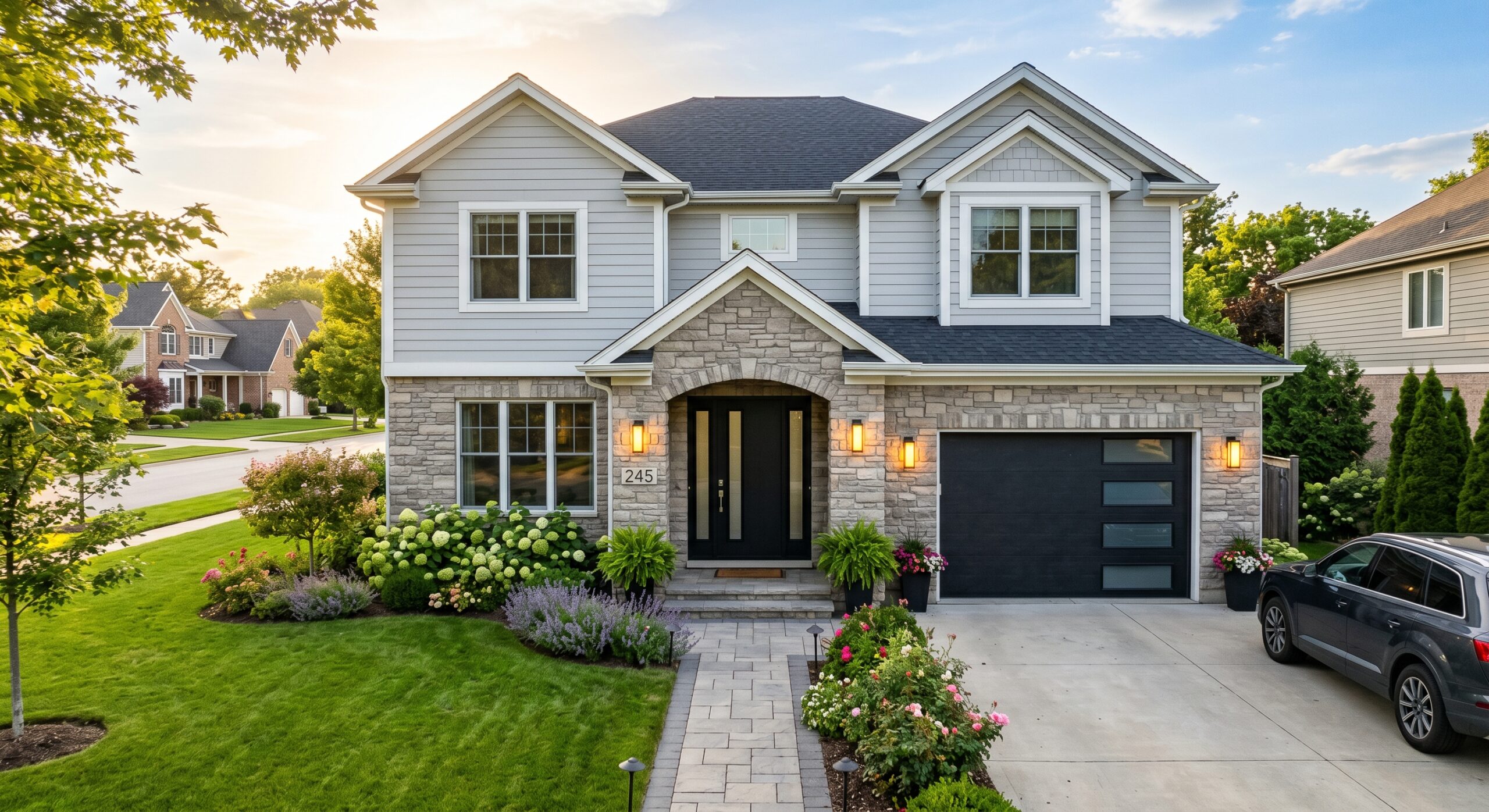
Not all DIY home projects deliver the same value. A fresh coat of paint or new light fixtures can update a space without costing much, while some improvements barely affect your home’s resale price. The best approach is choosing projects that improve both how you live in your home and what buyers will pay for it later, without spending too much. According to the National Association of Home Builders (NAHB), certain upgrades can return over 70% of their cost at resale. These are the three DIY projects with the highest returns, whether you plan to stay or sell soon.
At a Glance
Top 3 High-Return DIY Projects:
- Exterior Door Replacement (Steel): 91.3% cost recouped
- Garage Door Replacement: 93.8% cost recouped
- Manufactured Stone Veneer Siding: 96.1% cost recouped
These numbers come from Remodeling Magazine’s 2025 Cost vs. Value Report, which examined over 200 home improvement projects in 100 U.S. markets. The report shows that curb appeal upgrades regularly lead in return on investment, followed by kitchen and bathroom updates. For DIYers, these three projects balance cost, impact, and resale potential.
Why These Projects Rank High for DIYers
Some high-ROI projects require professional installation or special tools, but these three can be done by most homeowners with basic skills and patience. The projects:
- Replace an exterior door with a steel model
- Upgrade your garage door
- Install manufactured stone veneer siding
Each adds value for two main reasons homebuyers care about: security and appearance. A solid steel door suggests safety, while a new garage door and stone veneer improve curb appeal. These projects often cost under $2,000, making them accessible. For comparison, a minor kitchen remodel averages $26,000 but returns just 71% of that cost.
Before starting, honestly assess your skill level. Electrical work should only be done by confident DIYers who have practiced simpler tasks like installing light switches. If unsure, consult a pro for safety and long-term results. Budget Builds Daily covers these limits in our guide to home electrical projects.
Project #1: Replace an Exterior Door with a Steel Model
Estimated Cost: $200–$400 (including hardware)
Estimated DIY Time: 2–4 hours
Potential ROI: 91.3% (NAHB, 2025)
A new steel exterior door improves security and pays off. Unlike wood, steel doors resist warping, denting, and weather damage, saving on upkeep. According to the American Home Appliance Manufacturers International Organization (AHAMIO), homes with steel entry doors sell faster in areas where safety matters. Steel doors cost about half as much as fiberglass but offer similar energy efficiency and durability.
Materials Needed
- A pre-hung steel door (with frame and hardware)
- Screwdriver or impact driver
- Level
- Shims
- Caulk and caulk gun
- Exterior-grade screws
- Pry bar
- Safety glasses and work gloves
Pre-hung doors make DIY easier because they include the frame. This avoids adjusting hinges or installing a new jamb, saving time. Brands like Masonite and Pella offer budget models starting around $200. Choose a door with a U.S. Department of Energy (DOE)-certified R-value of at least 5 to save on energy bills.
How to Install
Remove the Old Door
Remove hinge pins and lift out the old door. If the frame is damaged, use a pry bar to remove it carefully. Check that the rough opening is square with a level—uneven frames cause air leaks and drafts.
Test-Fit the New Door
Place the new door in the opening to confirm fit. Leave a 1/8-inch gap around all sides for insulation. Trim the frame with a saw if the opening is too small, or add shims if it’s too large for a snug fit.
Install the Frame
Apply a bead of exterior caulk around the rough opening, then insert the new frame. Use shims to level it, checking often with a level. Once plumb, secure the frame with exterior screws every 6–8 inches.
Hang the Door
Attach hinges to the frame first, then hang the door. Use a level to confirm it swings freely. Adjust hinges if the door doesn’t close properly. Add weatherstripping around the edges to seal gaps.
Finish Up
Caulk the exterior edges to block water, then paint or stain the door frame to match your home. Clean up debris when done.
Tips to Boost Value
Pick a door with a National Fenestration Rating Council (NFRC)-certified energy rating to cut heating and cooling costs. Dark colors absorb summer heat; light colors reflect sunlight. In hurricane-prone areas, choose a door with Florida Building Code (FBC) compliance for extra safety.
Pair the door with fresh trim paint or a new house number plaque. Realtor.com says these small touches can raise perceived value by up to 5%.
If unsure about installation, Home Depot or Lowe’s offer installation for $150–$250. This saves time and prevents costly mistakes, especially for unusual door sizes.
Common Mistakes
- Skipping the level check: Uneven doors cause drafts and security issues.
- Ignoring weatherstripping: Gaps let in pests, dust, and moisture.
- Choosing the wrong size: Measure the rough opening twice before ordering.
For more on door safety and tools, see our guide to electrical projects.
Project #2: Upgrade Your Garage Door
Estimated Cost: $400–$800
Estimated DIY Time: 4–6 hours
Potential ROI: 93.8% (NAHB, 2025)
A garage door is the largest moving part of your home and a key curb appeal feature. According to the Garage Door Association of America (GAAR), replacing an old door can raise your home’s perceived value by up to 4%—more than a minor kitchen remodel at $26,000 for 71% ROI, for a fraction of the cost. Modern garage doors come in steel, wood, or fiberglass; steel offers the best mix of durability, security, and cost.
Steel doors are energy-efficient too. Energy Star-certified models can cut heating and cooling costs by up to 12%. In extreme climates, this adds up to real savings. Steel doors also need less upkeep than wood, which can warp or rot.
Materials Needed
- A new garage door (steel recommended)
- Torsion or extension springs (if replacing an existing door)
- Safety cables (for torsion springs)
- Level
- Tape measure
- Screwdriver or impact driver
- Drill
- Wrenches
- Pliers
- Safety glasses and work gloves
Pre-packaged garage door kits are sold at Home Depot and Lowe’s, ranging from $400 for basic models to $1,200 for insulated or decorative options. Look for a door with an ASTM International wind-resistance rating if you live in hurricane- or tornado-prone areas.
How to Install
Measure the Old Door
Measure width and height in three places (top, middle, bottom) for accuracy. Garage doors come in standard sizes like 8×7 feet or 9×7 feet, but custom sizes cost more. Write down exact measurements before ordering.
Remove the Old Door
Disconnect the automatic opener first. Then remove tracks, springs, and panels using a drill or wrench. Be cautious—the springs are under high tension and can cause injury if mishandled. If unsure, hire a pro for this step.
Install the New Tracks
Attach vertical tracks to the sides of the opening, keeping them plumb with a level. Then install horizontal tracks above the door, leaving room for the door to move. Secure everything with lag bolts, not drywall screws.
Assemble the Door Panels
Lay panels on the ground and attach hinges and rollers. Work in sections from the bottom. Most kits have pre-drilled holes, but check alignment as you go. A misaligned panel can cause the door to bind or jam.
Install the Springs
Springs are critical. Tension springs are common for DIYers but require careful handling. Follow the maker’s instructions exactly—wrong tension can let the door crash down or fly up. If uneasy, consider a torsion spring system, which is safer but more complex.
Attach the Tracks and Test
Hang the door on the tracks and test movement. It should glide smoothly without sticking. Adjust tracks or rollers as needed. Reconnect the automatic opener and program it per the maker’s instructions.
Weatherproofing
Add weatherstripping along sides and bottom to block drafts and pests. Caulk gaps around the frame to keep out moisture. Insulated doors improve energy efficiency further.
Tips to Boost Value
Choose a door with a Door and Window Marketplace-certified insulation rating if you face extreme temperatures. A well-insulated door can cut energy bills by up to 20%. If selling soon, pick a neutral color like white or beige—they appeal to the widest range of buyers.
Add a smart garage door opener with Wi-Fi for remote monitoring and alerts if left open. Chamberlain and LiftMaster offer budget options starting around $150.
If springs make you uneasy, many stores offer installation for $200–$400—worth it for safety and peace of mind.
Common Mistakes
- Ignoring safety cables: They stop the door from flying up if a spring breaks.
- Over-tightening springs: This can slam the door shut unexpectedly.
- Skipping the level check: Uneven tracks cause the door to bind or jam.
For more on garage door safety, see our guide to home electrical safety.
Project #3: Install Manufactured Stone Veneer Siding
Estimated Cost: $8–$12 per square foot (installed)
Estimated DIY Time: 2–3 days
Potential ROI: 96.1% (NAHB, 2025)
Manufactured stone veneer siding tops curb appeal upgrades. Unlike real stone, it’s lightweight, easier to install, and far cheaper—yet looks just like natural stone. The NAHB says homes with stone veneer sell for up to 5% more than similar homes without it. That beats a major kitchen remodel at $68,000 for 59% ROI, for far less cost.
Made from concrete or polyurethane, it resists cracking, fading, and weather damage. It’s fireproof too, which may lower homeowner’s insurance in some areas. Unlike wood, it needs no sealing or painting and won’t warp or rot.
Materials Needed
- Manufactured stone veneer panels or individual stones
- Mortar and trowel
- Scratch coat and bonding agent
- Weep screed (for the base)
- Corrosion-resistant lath or wire mesh
- Hammer and nails (for lath)
- Level
- Tape measure
- Utility knife
- Safety glasses and work gloves
Veneer comes in panels or individual stones, priced $8–$12 per square foot for materials only. Brands like Boral and Bel Air Stone offer many colors and textures. Panels are easier for DIYers than individual stones because they’re pre-assembled and need less cutting.
How to Install
Prepare the Surface
Clean the exterior wall, removing loose paint or debris. Level uneven spots with a compound. For wood or plywood walls, attach corrosion-resistant lath with galvanized nails every 16 inches. For masonry walls, skip the lath and apply a bonding agent directly.
Install the Weep Screed
The weep screed sits at the base to drain water. It should extend at least 4 inches below the finished floor and be level with the foundation. Secure it with corrosion-resistant screws every 12 inches.
Apply the Scratch Coat
The scratch coat bonds the veneer to the wall. Mix mortar per maker instructions and apply with a trowel, creating a rough texture. Let it dry 24 hours.
Lay the Stone Veneer
Start at the bottom and work up. For panels, align the first row with the weep screed and press into the scratch coat. Use a level to keep it straight. For individual stones, arrange them in a staggered pattern, leaving small gaps for mortar. Cut stones to fit around corners, windows, and doors with a utility knife or angle grinder. Use a wet saw for curves or intricate cuts.
Fill the Gaps
After stones are in place, fill gaps with mortar using a grout bag or trowel. Work in small sections to prevent drying. Wipe excess mortar with a damp sponge before it sets.
Seal the Joints
Once mortar is fully cured (24–48 hours), apply sealant to joints to block water. Use a maker-recommended product.
Clean Up
Wipe the veneer with a damp cloth to remove mortar haze. Avoid harsh chemicals that can discolor the stone. Let sealant cure 24 hours before exposing to moisture.
Tips to Boost Value
Pick colors and textures that match your home’s existing siding or brick. Earth tones like sandstone or slate blend with most exteriors; darker colors feel modern. In hot climates, lighter colors reflect sunlight and cut cooling costs.
Use polymer-modified mortar for the scratch coat and joints for extra durability. It flexes better than traditional mortar and resists cracking in freeze-thaw climates. Mapei and Laticrete offer good options.
If mortar work feels hard, many masons install for $10–$15 per square foot. This saves time and ensures a pro finish, especially for complex designs.
Common Mistakes
- Skipping the lath: Veneer can detach from the wall over time.
- Applying too much mortar: Excess mortar can bulge or crack.
- Ignoring the weep screed: Without it, water can get trapped behind the veneer, causing mold or rot.
For more exterior tips, see our guide to budget-friendly home improvements.
How to Pick the Right Project for Your Home
These projects won’t suit every home. Here’s how to choose the best one (or ones) for you:
1. Check Your Home’s Condition
If your exterior looks dated or damaged, stone veneer siding boosts curb appeal fastest. If your garage door is old or drafty, replacing it saves energy and improves security. A warped or unsafe entry door? A steel upgrade is a must.
Walk around your home and note visible issues. Take photos and compare them to before-and-after examples online or in magazines to visualize each project’s impact.
2. Set a Budget
All three projects are budget-friendly, but costs add up. A high-end steel door can reach $800; a basic garage door about $400. Manufactured stone veneer runs $8–$12 per square foot, so a 200-square-foot wall costs $1,600–$2,400.
Split your budget into thirds: one-third for materials, one-third for tools, one-third for surprises. This prevents running out of funds mid-project. If cash is tight, do one project at a time or watch for sales.
3. Focus on ROI
If resale is key, stone veneer siding wins at 96.1% ROI. Garage doors follow at 93.8%, then steel doors at 91.3%. If you plan to stay long-term, energy savings and durability may matter more. A steel door can save $50–$100 yearly on heating and cooling; a well-insulated garage door can cut energy bills by up to 20%.
Use a simple ROI calculator like Bankrate’s to compare each project’s long-term savings. Plug in upfront cost, energy savings, and resale value to see which wins for you.
4. Match Projects to Your Skills
Beginners should start with steel door replacement—it’s the easiest. Garage doors are harder due to springs and tracks, so best for intermediate DIYers. Stone veneer is the hardest, needing precise mortar work and patience. If unsure, practice on smaller projects first or watch trusted tutorials like This Old House.
For more on building skills, see our guide to essential home repair tools.
5. Time Your Project
Weather matters for exterior work. Aim for late spring or early summer when it’s mild and rain is less likely. Indoor projects like door installation are easier in winter when weather delays don’t matter.
Check the forecast before starting and plan for at least 2–3 rain-free days for outdoor jobs. Garage doors are heavy—get a helper to lift them safely.
Tools and Materials Checklist for All Three Projects
This list covers what you’ll need for all three projects. Many tools can be rented or borrowed if you don’t own them.
| Tool/Material | Steel Door Replacement | Garage Door Upgrade | Stone Veneer Siding |
|---|---|---|---|
| Safety Gear | Safety glasses, work gloves | Safety glasses, work gloves, ear protection | Safety glasses, work gloves, dust mask |
| Measuring and Layout | Tape measure, level | Tape measure, level | Tape measure, level, utility knife |
| Fasteners and Hardware | Exterior screws, shims | Lag bolts, corrosion-resistant screws | Galvanized nails, corrosion-resistant screws |
| Specialized Tools | Pry bar, caulk gun | Drill, wrenches, pliers, spring tool | Trowel, grout bag, hammer |
| Materials | Steel door, weatherstripping, caulk | Garage door kit, weatherstripping, sealant | Stone veneer, mortar, scratch coat, bonding agent, weep screed, lath |
For a deeper tool guide, see our article on essential home repair tools.
FAQs About the Highest-Return DIY Projects
What’s the easiest DIY project to start with?
The steel door replacement is the most beginner-friendly. It uses basic tools, needs little prep, and the steps are straightforward. Pre-hung doors include the frame, making installation even easier. Build your confidence here before moving to harder projects like garage doors or stone veneer siding.
For a simple start, see our guide on light switch installation—it covers tool use and electrical basics safely.
Do these projects need permits?
Permit rules vary by location, but most DIY door and siding projects don’t require permits unless you change the home’s structure. Replacing a garage door usually doesn’t need a permit, but enlarging the opening might. Always check with your local building department to avoid fines.
If unsure about permits, see our guide to home electrical projects—it includes tips on local rules and safety.
How long until these projects pay for themselves?
Payback depends on local energy costs and home value, but most owners see returns in 2–5 years. A steel door can save $50–$100 yearly on utilities; a well-insulated garage door can cut energy bills by up to 20%. Stone veneer siding doesn’t cut utility costs but can raise resale value by 5%, adding thousands at closing.
Use Energy.gov’s home energy audit tool or ask a local real estate agent for resale estimates to calculate your payback.
Can I do these projects with no experience?
Yes, but match the project to your skill level. Steel door replacement is easiest, followed by garage doors for intermediate DIYers. Stone veneer siding is hardest and may need practice or pro help for complex designs. If unsure, take a store workshop or watch trusted videos.
For more ideas, see our article on 15 weekend DIY projects—it lists beginner-friendly ideas to build skills.
What’s the cheapest way to boost curb appeal?
Stone veneer siding offers the highest ROI at 96.1%, but it costs more upfront. If money’s tight, try smaller changes like painting your front door a bold color ($30) or adding outdoor lighting ($50–$150). These updates transform your home’s look without big spending. For more cheap ideas, see our guide to budget-friendly bathroom upgrades—many tips apply to exteriors too.
Where to Focus Your DIY Efforts
The goal of DIY home projects isn’t just to improve your space—it’s to make smart investments that pay off in comfort, safety, and resale value. The three projects here—steel door replacement, garage door upgrades, and manufactured stone veneer siding—top the list for ROI, ease, and impact. Each balances cost, durability, and curb appeal, making them smart choices for budget-conscious owners.
Before you start, check your home’s needs and your own skills. Pick the project that fits your goals, whether it’s energy savings, security, or a curb appeal boost. Even small touches like fresh paint or new house numbers can enhance these bigger projects and make them stand out.
For more ideas, explore our DIY home improvement projects or budget-friendly DIY tags. We’re here to help you tackle your next project with confidence and keep costs low without sacrificing quality.
Leave a Reply