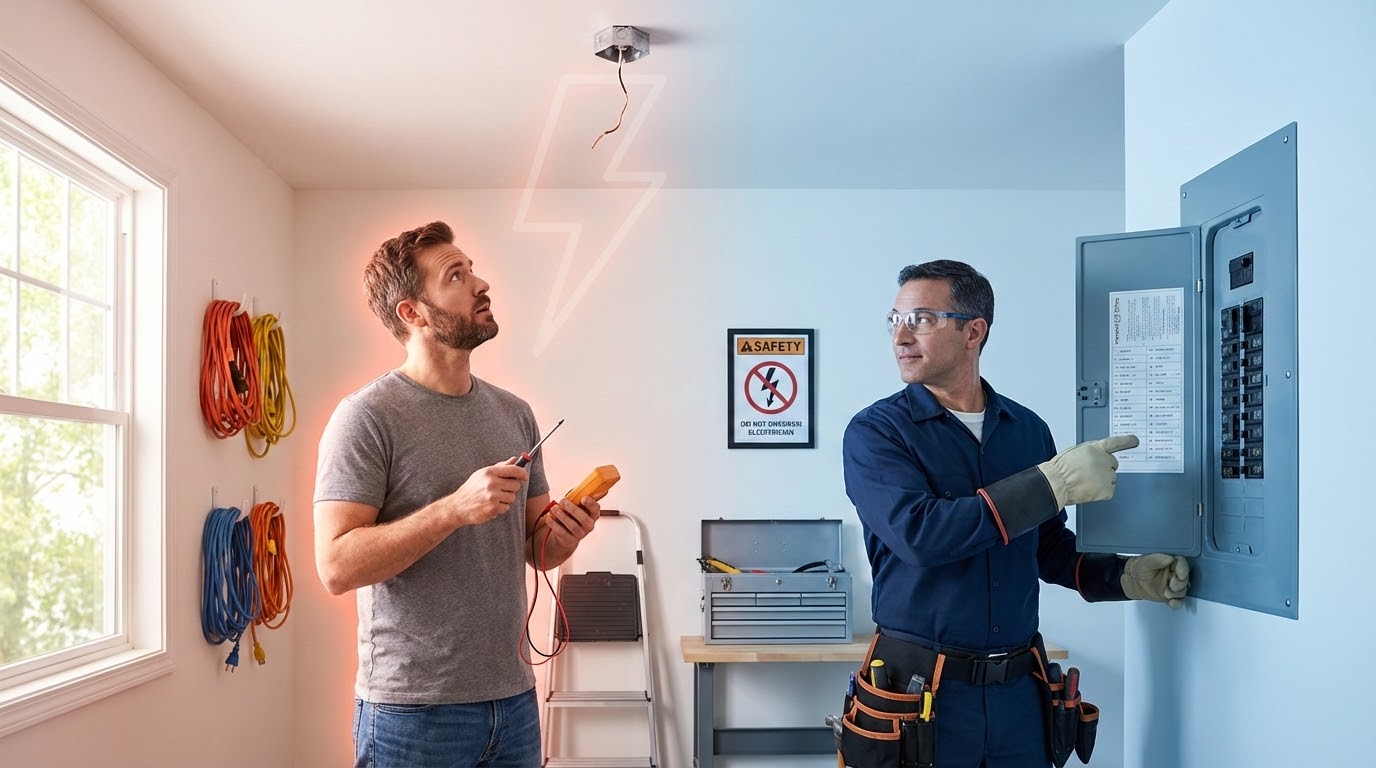
Many property owners are taking on more home improvement projects than ever before. Economic pressures have inspired a surge in do-it-yourself activities across American households. However, certain tasks require special consideration due to potential hazards.
Statistics reveal the serious nature of this issue. According to the U.S. Consumer Product Safety Commission, nearly 400 electrocutions occur in the United States each year. Approximately 15 percent of these tragic incidents relate to consumer products, with wiring hazards accounting for nearly 14 percent of these deaths.
This guide helps property owners navigate home electrical projects responsibly. It clarifies which tasks you might handle yourself and which situations demand professional expertise. Understanding these distinctions protects both your well-being and your investment.
Cutting corners on projects involving your home’s systems can lead to costly mistakes. The risks include immediate injuries and potential long-term hazards from improperly completed installations.
Key Takeaways
- Economic factors are driving more property owners to attempt their own home projects
- Electrical incidents cause hundreds of injuries and fatalities annually in the U.S.
- Most people lack proper training for complex system installations
- This guide helps distinguish between manageable tasks and those needing experts
- Improper installations create immediate and long-term safety concerns
- Knowing your limits protects both personal safety and financial investment
Understanding DIY Electrical Work and Safety
The intricate network that brings electricity into American households represents one of the most critical yet misunderstood home systems. This arrangement includes service panels, circuits, outlets, and switches working together to distribute energy throughout your property.
Understanding basic principles like voltage, amperage, and circuit capacity helps homeowners assess their capabilities. These concepts determine how much power your system can handle safely.
Thorough planning remains essential for any electrical project. Even minor errors can create serious hazards that compromise your household’s well-being.
Statistics highlight the importance of proper electrical work. Approximately 360,900 residential fires occur annually in the United States. Electrical malfunction causes the largest fires, resulting in significant property damage and tragic losses.
Between 2003 and 2005, electrical failure accounted for 89 percent of residential electrical fires. This demonstrates why correct installation and maintenance matter tremendously.
Learning about your home’s electrical system empowers you to make informed decisions. This knowledge helps determine when professional assistance becomes necessary for complex tasks.
DIY electrical work safe: What Tasks Can Homeowners Handle
Property owners seeking to maintain their electrical systems have several low-risk options they can handle independently. These activities require minimal technical knowledge while keeping safety as the top priority.
Simple maintenance tasks fall within most homeowners’ capabilities. Replacing light bulbs is one example—just ensure the switch is off before handling. Resetting tripped circuit breakers is another manageable project, though frequent tripping signals a deeper issue needing expert attention.
Proper use of power strips and surge protectors represents another area where homeowners can take control. Understanding load management prevents circuit overloads. Avoid chaining multiple strips together, as this creates potential hazards.
Battery-powered device installations offer safe opportunities for hands-on involvement. Smoke alarms, carbon monoxide detectors, and plug-in nightlights don’t require wiring interaction. These installations provide peace of mind without complex electrical work.
Recognizing the boundary between these simple repairs and more complex projects is essential. Anything involving wiring, outlets, or circuit panels should involve licensed professionals. This approach ensures code compliance and household safety.
Essential Safety Guidelines for DIY Electrical Projects
Proper preparation forms the foundation for any hands-on home improvement involving your power system. The Electrical Safety Foundation International (ESFI) strongly recommends hiring a licensed professional. If you proceed on your own, following strict protocols is non-negotiable.
Your first action must always be to de-energize the circuit. Locate the main service panel and switch off the correct breaker. Unplug any lamps or appliances connected to the circuit you are addressing.
Never assume the power is off. Use a voltage tester to check the wires before you make contact. Breaker labels can be incorrect, making this verification step critical for personal safety.
Avoid all contact with plumbing or gas pipes during your project. These metal conduits can accidentally carry current, creating a severe shock hazard. Maintain a clear workspace away from these elements.
Always plug your power tools into a Ground Fault Circuit Interrupter (GFCI) outlet. This device provides vital protection against shocks, especially in damp areas like kitchens or outdoors. Keep extension cords under 100 feet long for optimal tool performance and safety.
Select your equipment carefully. Use tools with insulated grips specifically designed for this kind of task. Ensure all guards and safeguards on your equipment are correctly in place before operation.
Personal protective equipment (PPE) is essential. Invest in safety goggles, gloves, and hearing protection. Wear appropriate clothing without loose sleeves or dangling strings that could get caught.
Exercise extreme caution when cutting or drilling into walls. Hidden wires and pipes are common. A careful approach prevents accidental damage and personal injury, making your project safer for everyone in the home.
Understanding the Risks and Common Hazards in DIY Electrical Work
The potential consequences of amateur electrical projects extend far beyond simple inconvenience. Electrocution represents the most severe risk, with even minor shocks capable of disrupting heart rhythm. This can lead to cardiac arrest or severe burns that require immediate medical attention.
Fire hazards present another critical concern when homeowners handle wiring without proper training. Faulty connections and poor insulation can spark destructive electrical fires. Statistics show these incidents contribute significantly to the thousands of residential fires reported each year.
Overloaded circuits create additional dangers when too many appliances draw power simultaneously. This excess demand leads to overheating and potential equipment damage. Poor insulation increases the likelihood of wires contacting conductive surfaces, creating shock hazards.
Common mistakes include improper wiring connections and inadequate grounding. These errors can have catastrophic outcomes for homes and occupants. Water contacting outlets or wires creates particularly deadly combinations that require professional intervention.
Unanticipated issues like outdated components or hidden wiring locations complicate projects. Approximately 37,000 nail-gun injuries occur annually, many during home improvements near electrical systems. Understanding these risks helps property owners make informed decisions about when to seek expert assistance.
When to Call a Licensed Electrician for Your Home Electrical Needs
Certain home improvement tasks demand specialized expertise that only licensed professionals can provide. Complex installations involving your power distribution network require precise knowledge and proper tools.
Always contact a qualified electrician for these critical jobs:
- Panel upgrades – Modern homes need higher capacity service panels
- Rewiring projects – Precise calculations prevent circuit overloads
- New circuit installations – Proper load balancing avoids overheating
- Outlet and switch replacements – Wiring errors create shock hazards
- Troubleshooting complex issues – Specialized diagnostic tools identify problems
Licensed electricians undergo rigorous training to understand system complexities. They follow strict safety protocols that protect both workers and homeowners.
Code compliance is essential for passing inspections and avoiding fines. Professionals ensure all installations meet local and national building codes. This becomes crucial when selling your property or completing major renovations.
Many insurance policies require licensed electricians for electrical work. Coverage may be denied for damages from unapproved DIY projects. While professional services cost more initially, they prevent expensive repairs from mistakes.
Most qualified electricians provide warranties on their craftsmanship. This offers added protection and demonstrates confidence in their work quality. Hiring experts saves time and ensures your project gets done correctly.
Conclusion
The balance between hands-on involvement and expert intervention defines successful home maintenance. While basic tasks like bulb replacement remain manageable, complex system projects demand professional expertise.
Understanding the serious risks associated with improper installations protects your household. Licensed electricians bring essential knowledge of building codes and hazard prevention. Their training minimizes potential for fires, injuries, and property damage.
Prioritizing safety over temporary savings ensures long-term protection for your family and investment. Recognizing when to call professionals represents responsible homeownership that values well-being above all.
FAQ
Is it legal for me to do my own electrical repairs?
Laws vary by location. Many areas allow homeowners to perform minor tasks, like replacing a light fixture, on their own property. However, major installations, service panel work, or any project requiring a permit typically must be done by a licensed professional to comply with local building codes.
What is the biggest danger of handling power system projects myself?
The most significant hazards are severe shock and electrical fires. Incorrect wiring can create hidden dangers that may not be apparent immediately but can lead to property damage or injuries much later. Faulty connections are a leading cause of residential building fires.
Can doing my own wiring affect my home insurance?
Yes, it can. If an electrical fire or other damage occurs due to unpermitted or faulty do-it-yourself installations, your insurance company may deny the claim. It’s crucial to check your policy and have major work inspected to ensure coverage.
What basic tools should I have for simple home electrical jobs?
For very basic tasks, you’ll need a voltage tester to confirm power is off, insulated screwdrivers, wire strippers, and needle-nose pliers. Always use tools with rubberized, non-conductive handles to help prevent shocks.
When is it absolutely necessary to hire a licensed electrician?
You should always call a pro for any work on the main service panel, installing new circuits, upgrading the entire system, or dealing with issues in the bathroom or kitchen where water is present. These complex jobs involve high risk and must meet strict safety codes.
Are there any simple fixes I can confidently do today?
Yes, homeowners can usually safely replace items like light switches, standard outlets, and light fixtures, provided they turn off the circuit at the breaker panel and verify there is no power. Always follow manufacturer instructions carefully.