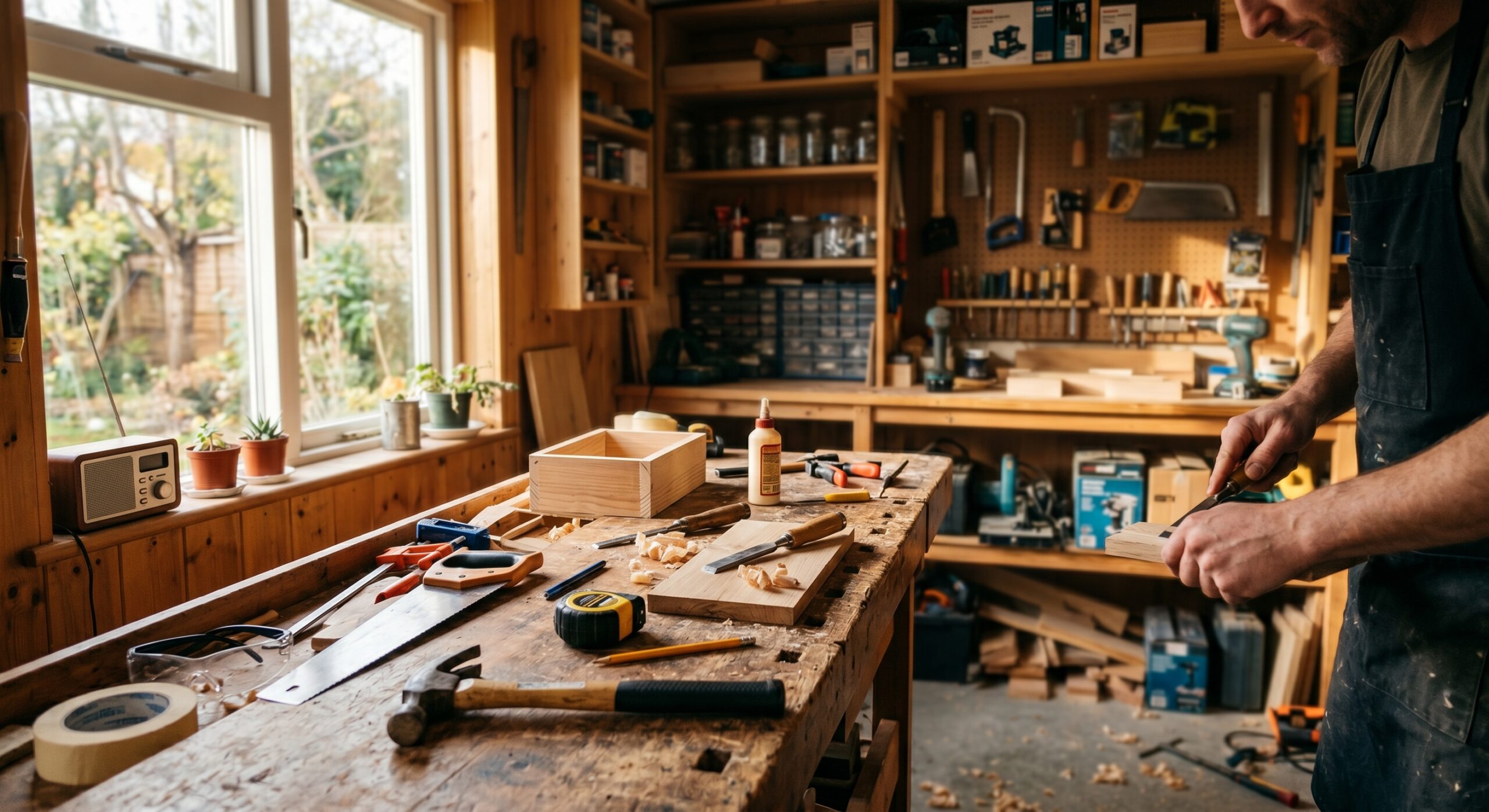
Fixing a leaky faucet, patching a hole in the wall, or unclogging a drain doesn’t require expensive tools or professional help. Most homeowners can handle small repairs themselves with basic tools and save hundreds on service calls. Whether you’re dealing with plumbing, electrical, or structural issues, these DIY home repair tips will help you maintain your home without spending much.
At a Glance
Key Facts:
- Cost Savings: DIY repairs can save homeowners an average of $200–$500 per year on service calls, according to the U.S. Department of Energy.
- Accessibility: Most basic repairs require only common household tools and materials costing under $50.
- Skill Building: Completing small fixes builds confidence for larger projects.
- Safety First: Always turn off power or water before starting repairs.
This guide covers cheap home fixes for common issues—from squeaky floors to running toilets—and explains when it’s worth calling a pro.
Why DIY Home Repair Saves Money and Builds Skills
In 2025, the average cost of a professional home repair call reached $150–$300 just for the service fee, according to Angie’s List. Many of these issues—like a dripping faucet or a loose cabinet hinge—require only a screwdriver and a few minutes. Learning basic home repair skills lets homeowners:
- Cut ongoing costs: Fixing a running toilet can save up to $200 annually in water waste.
- Increase home value: Well-maintained homes hold their value better. A 2024 National Association of Home Builders report found that homes with updated plumbing and electrical systems sold 7% faster than those needing repairs.
- Gain independence: No need to wait days for an appointment or pay for unnecessary parts.
For example, replacing a showerhead costs less than $25 and takes 10 minutes, but a plumber could charge $100 for the same job. These affordable home maintenance tasks add up to significant savings over time.
Start with small, low-risk projects like patching drywall or tightening loose hinges. Each completed repair builds your confidence for bigger challenges like light switch replacements or toilet repairs.
Essential Tools for DIY Home Repairs
You don’t need a garage full of tools to fix most household issues. A well-organized essential tool kit can handle 80% of basic repairs. Here’s what every budget-conscious homeowner should own:
| Tool | Purpose | Cost (USD) |
|---|---|---|
| Adjustable wrench (8–10 inch) | Tightening nuts and bolts on pipes, faucets, and fixtures | $10–$20 |
| Phillips and flathead screwdrivers | Assembling furniture, tightening cabinet hinges, removing outlet covers | $5–$15 |
| Putty knife (2–3 inch) | Patching drywall holes, scraping paint or caulk | $5–$10 |
| Cordless drill/driver | Drilling pilot holes, driving screws into wood and drywall | $50–$100 |
| Tape measure (25 feet) | Measuring spaces for shelves, blinds, or furniture placement | $10–$20 |
| Utility knife | Cutting drywall, trimming carpet, opening packages | $5–$12 |
| Needle-nose pliers | Tightening small nuts, bending wire, retrieving items from drains | $8–$15 |
| Caulk and sealants (silicone and latex) | Sealing gaps around windows, sinks, and baseboards | $8–$25 |
For under $150, you can assemble a functional foundation for DIY repairs. Skip specialty tools like pipe wrenches or oscillating saws until you tackle specific projects. As your skills grow, you can expand your kit with a curated list of must-haves.
What You Can Skip: Overrated Tools for DIYers
Some tools marketed to DIYers are rarely used by homeowners. Avoid spending money on:
- Automatic caulk guns: A simple manual caulk gun works for most household repairs.
- Expensive multitools: Unless you’re cutting metal pipes regularly, a basic hacksaw or reciprocating saw suffices.
- Specialty wrenches: A single adjustable wrench covers 90% of nut and bolt tasks.
- Laser levels: A $20 bubble level is accurate enough for most vertical and horizontal alignments.
Focus your budget on versatility, not gimmicks. A well-chosen toolkit outperforms a cluttered collection of rarely used gadgets.
Quick Fixes for Common Household Problems
These cheap home fixes tackle the most frequent annoyances homeowners face. Each solution costs under $25 and takes less than 30 minutes.
1. Fixing a Leaky Faucet (Plumbing)
According to the U.S. Environmental Protection Agency, a leaky faucet dripping at one drop per second wastes more than 3,000 gallons of water annually. Fixing it is straightforward:
Materials Needed:
- Replacement washer or cartridge (specific to faucet model)
- Adjustable wrench
- Flathead screwdriver
- Teflon tape (optional, to prevent future leaks)
Steps:
- Turn off the water supply: Locate the valves under the sink and turn clockwise to shut off water flow.
- Disassemble the faucet: Remove the handle with a screwdriver, then unscrew the packing nut with an adjustable wrench.
- Replace the washer or cartridge: Take the old part to a hardware store to match the replacement. Install the new washer or cartridge, ensuring it sits flush.
- Reassemble and test: Turn the water back on and check for leaks. Use Teflon tape on threads to prevent future seepage.
If the faucet still leaks, the issue might be a corroded valve seat, which requires a $5 seat wrench or a call to a plumber. But in most cases, a $3 washer resolves the problem permanently.
2. Unclogging a Drain (Plumbing)
A clogged sink or shower drain costs $120–$250 to have professionally cleared. Save that money with a plunger or a drain snake:
Method 1: Plunger
- Fill the sink or tub with enough water to cover the plunger’s rubber cup.
- Place the plunger over the drain and pump vigorously 10–15 times.
- Remove the plunger and run hot water to flush the clog away.
Method 2: Drain Snake (Auger)
A 25-foot drain snake costs $20 and handles hair clogs in showers better than a plunger. Insert the snake into the drain and crank the handle to break up or retrieve the obstruction.
Prevention tip: Use a drain strainer to catch hair and debris. Pour a cup of baking soda followed by vinegar monthly to break down buildup.
3. Patching a Hole in Drywall (Interior Walls)
A 1-inch hole in drywall can be fixed with a $5 patch kit and 15 minutes. For larger holes (up to 6 inches), you’ll need a scrap piece of drywall, joint compound, and a putty knife.
Steps for Small Holes:
- Clean the area: Remove loose debris and sand the edges smooth.
- Apply spackle or joint compound: Fill the hole with spackle using a putty knife. Let it dry completely (usually 1–2 hours).
- Sand lightly: Smooth the patch with 120-grit sandpaper.
- Prime and paint: Match the paint color to your wall and touch up.
For large holes, cut a square around the damaged area, insert a drywall patch, secure it with drywall tape, and cover with joint compound. Sand and paint once dry.
Pro tip: Keep a small can of leftover paint from your last room project. Most hardware stores can match paint colors from a sample.
4. Tightening Loose Cabinet Hinges (Furniture)
Squeaky or sagging cabinet doors are an easy fix with a screwdriver. Loose hinges cause doors to misalign or scrape against the frame.
Steps:
- Remove the hinge screws: Use a screwdriver to unscrew the loose hinge from the cabinet frame.
- Fill stripped holes (if needed): If screws won’t tighten, insert toothpicks coated in wood glue into the hole, then reinsert the screw.
- Realign the door: Adjust the hinge screws to center the door properly.
- Tighten all screws: Ensure no screws are left loose.
This budget-friendly fix costs nothing and restores smooth cabinet operation in minutes.
5. Replacing a Toilet Flapper (Bathroom)
A worn-out flapper causes a toilet to run continuously, wasting up to 200 gallons of water per day. Replacing it costs $5 and takes 10 minutes.
Steps:
- Turn off the water supply: Locate the valve behind the toilet and shut it off.
- Flush the toilet: Empty the tank completely.
- Remove the old flapper: Unhook the flapper from the flush valve and lift it off the overflow tube.
- Install the new flapper: Attach the new flapper to the flush valve and overflow tube. Ensure the chain has ½ inch of slack.
- Test the flush: Turn the water back on and check for leaks or running.
If the toilet still runs, the flush valve might be corroded and need replacement, which costs $15–$25.
Electrical Repairs You Can Do Safely
Electrical work requires caution, but many basic tasks—like replacing a light switch or outlet cover—are within reach for beginners. Always follow these safety protocols:
- Turn off the power: Use the circuit breaker or fuse box to shut off electricity to the area you’re working on.
- Test before touching: Use a non-contact voltage tester to confirm wires are dead.
- Use insulated tools: Avoid metal tools that can conduct electricity.
- Call a pro for complex tasks: Wiring a new circuit or installing a ceiling fan should be left to licensed electricians.
6. Replacing a Light Switch
A faulty light switch flickers or fails to turn lights on or off. Replacing it costs under $10 and takes 15 minutes. For a step-by-step guide, visit How to Install a Light Switch: A Complete Beginner’s Guide.
Key steps include:
- Turn off power at the circuit breaker.
- Remove the switch plate and unscrew the switch from the electrical box.
- Disconnect the wires and connect them to the new switch (match the colors: black to black, green to ground).
- Secure the switch in the box and reinstall the plate.
If you’re unsure about wiring, consult a beginner’s guide like Electrical Basics for Beginners before starting.
7. Fixing a Loose Outlet
An outlet that wiggles or doesn’t hold plugs securely may have loose screws in the electrical box. Tightening them can restore function:
Steps:
- Turn off the power: Use the circuit breaker to cut electricity to the outlet.
- Remove the outlet cover: Unscrew the cover plate and outlet screws.
- Tighten the outlet screws: The outlet should be snug against the electrical box. If not, tighten the screws holding it in place.
- Check for damage: If the outlet is cracked or scorched, replace it with a new $5 outlet.
- Test the outlet: Use a voltage tester to ensure it’s working before restoring power.
Safety note: If wires are frayed or the box feels hot, call an electrician immediately.
When to Call a Professional
While many DIY repair tasks save money, some repairs require professional expertise. Know your limits to avoid costly mistakes or safety hazards:
| Issue | DIY Risk | Professional Solution | Estimated Cost |
|---|---|---|---|
| Gas line leaks | Explosion or carbon monoxide poisoning | Call your gas company immediately | Free (emergency service) |
| Major electrical wiring (new circuits, panels) | Electrocution or fire hazard | Licensed electrician | $400–$1,200 |
| Structural cracks wider than ¼ inch | Compromised foundation | Structural engineer or contractor | $300–$1,000+ |
| Water heater installation | Gas or water leaks | Plumber | $800–$2,000 |
| Mold remediation (larger than 10 sq ft) | Health risks and spread of spores | Certified mold remediation specialist | $500–$6,000 |
If a repair involves permits, specialized tools, or potential hazards, hiring a pro is the smarter choice. For example, installing a new toilet is DIY-friendly, but rerouting plumbing for a bathroom remodel often requires a plumber.
Use this rule of thumb: If the repair could cause water damage, fire, or structural compromise, call a professional. Otherwise, embrace the challenge with your affordable home maintenance toolkit.
DIY Repairs That Add Long-Term Value
Not all budget-friendly fixes are reactive. Some proactive repairs improve your home’s efficiency and resale value:
| Project | Cost (DIY) | ROI (Resale Value Increase) | Time Required |
|---|---|---|---|
| Sealing air leaks around windows and doors | $10–$50 | 3–10% (energy savings) | 2 hours |
| Adding weatherstripping to exterior doors | $15–$40 | 2–7% (reduced heating/cooling costs) | 30 minutes |
| Repairing or replacing damaged roof shingles | $30–$150 | 5–15% (prevents water damage) | 2–4 hours |
| Painting exterior trim or siding | $50–$200 | 3–8% (curb appeal) | Weekend project |
These projects fall into the basic home repair skills category and can be completed in a weekend. For more inspiration, explore 15 Weekend DIY Projects That Add Value to Your Home for Under $100.
Safety Guidelines for DIY Home Repairs
Even small projects can pose risks. Follow these electrical safety guidelines to stay safe:
- Avoid working on wet surfaces: Water and electricity are a dangerous combination. Dry surfaces thoroughly before electrical repairs.
- Wear gloves and safety glasses: Protect your hands from sharp edges and debris.
- Use ladders properly: Place the ladder on a flat, stable surface and maintain three points of contact (two hands and one foot, or two feet and one hand).
- Inspect tools before use: Check for damaged cords, frayed wires, or cracked handles.
- Work with a partner: Especially for heavy lifting or ladder tasks.
For more safety tips, refer to OSHA’s guidelines for home improvement.
Common Mistakes to Avoid
Even the best DIY home repair tips can go wrong without proper planning. Steer clear of these pitfalls:
- Skipping the permit: Some repairs, like electrical work or structural changes, require permits. Check local building codes to avoid fines.
- Over-tightening screws: This can strip holes in wood or crack drywall. Tighten until snug, then stop.
- Ignoring the root cause: Patching a hole in drywall without fixing the leak behind it leads to recurring damage.
- Using the wrong materials: Cheap caulk or paint won’t last. Invest in quality products for long-term fixes.
- Rushing the job: Take your time measuring, cutting, and assembling. Precision saves rework.
For example, if you patch a wall without addressing a plumbing leak, mold will return in weeks. Always diagnose the problem before applying a cheap home fix.
How to Know When a Repair Is Beyond DIY
If you encounter any of the following during a repair, stop and call a professional:
- Gas smells or hissing sounds near pipes.
- Electrical sparks or buzzing sounds from outlets.
- Water pooling where it shouldn’t (under sinks, around toilets).
- Structural beams or joists showing significant sagging or cracks.
- Any situation where you feel unsafe or unsure of the next step.
Bottom line: Your safety and your home’s integrity come first. There’s no shame in knowing when to hire a pro.
Building a Routine of Affordable Home Maintenance
Preventative maintenance is the best way to avoid costly repairs. These budget-friendly fixes take less than an hour and prevent bigger headaches:
- Monthly:
- Check faucets and toilets for leaks.
- Test smoke detectors and replace batteries.
- Clean gutters and downspouts.
- Quarterly:
- Inspect caulking around sinks, tubs, and windows.
- Tighten loose cabinet hinges and doorknobs.
- Test GFCI outlets (use the “test” button).
- Annually:
- Clean refrigerator coils to improve efficiency.
- Inspect roof shingles for damage after winter.
- Drain and flush the water heater to remove sediment.
By incorporating these tasks into your routine, you’ll catch small issues before they become expensive problems. For example, cleaning gutters prevents water damage to your foundation, which costs an average of $4,500 to repair, according to HUD.
Resources to Expand Your DIY Skills
Mastering basic home repair skills is a journey. Use these resources to build your expertise:
- YouTube Channels:
- Bailey Line Road (general DIY)
- See Jane Drill (women-focused DIY)
- The Home Repair Tutor (step-by-step guides)
- Books:
- The Complete Guide to Home Repair by Creative Publishing International
- Black & Decker: The Complete Photo Guide to Home Repair
- Websites:
- Family Handyman (project guides)
- This Old House (renovation inspiration)
For more targeted guidance, explore Budget Builds Daily’s DIY Home Repairs section, where we break down projects from start to finish.
Final Thoughts: Confidence Comes with Practice
Every expert was once a beginner. Start with simple DIY home repair tips like unclogging a drain or tightening a loose hinge. As your skills grow, tackle more complex projects like replacing a toilet or patching drywall. The key to saving money and maintaining your home is consistency.
Remember:
- Invest in a few essential tools and expand as you go.
- Always prioritize safety—turn off power, water, and gas before starting repairs.
- Know when to call a professional to avoid costly mistakes.
- Celebrate small victories. Each repair completed is a step toward self-sufficiency.
With the right approach, affordable home maintenance becomes second nature. Your home will thank you with fewer emergencies and a higher resale value.